Field notes from A Vampire Hunter
Legend tripping, vampiric ethnography & postcards from the city of the Dead

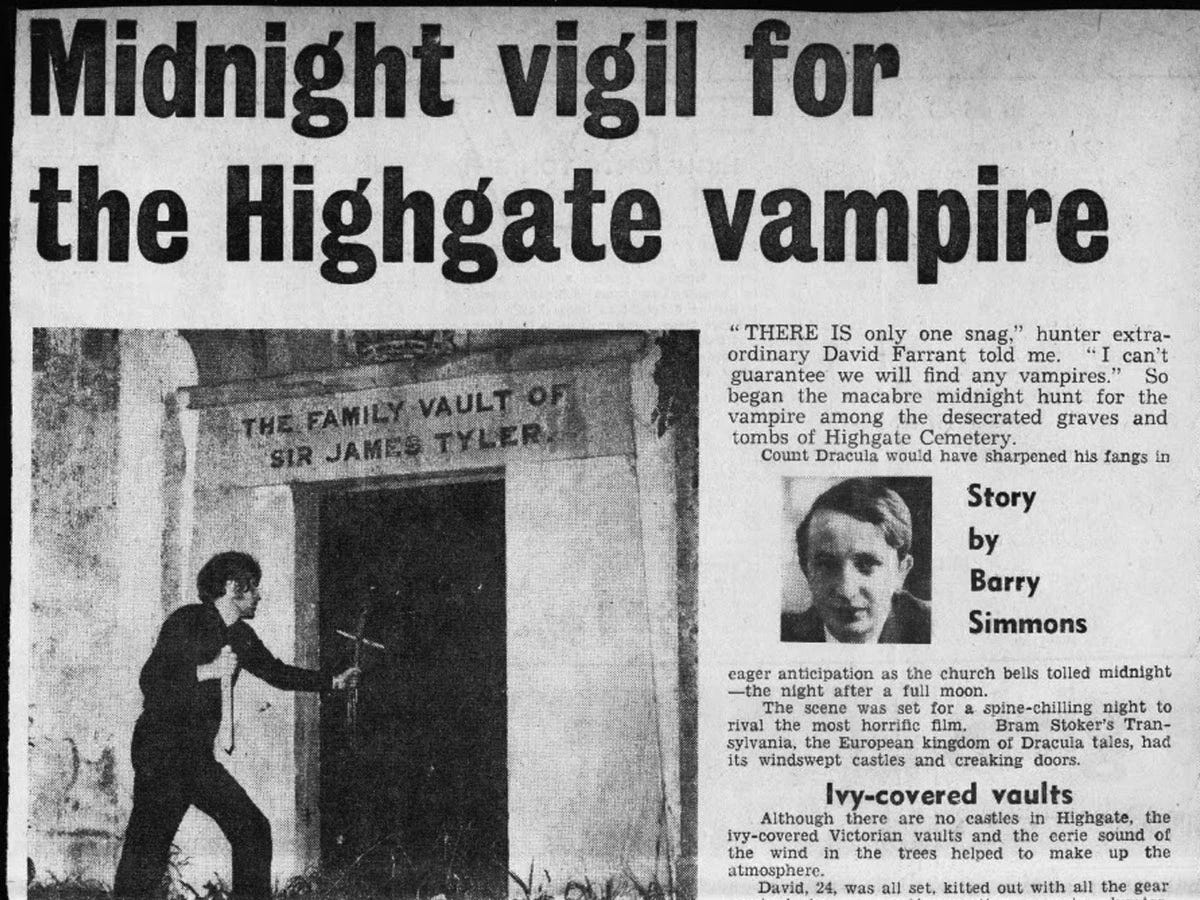
‘I will come,’ the priest answered, ‘for I have read in old books of these strange beings which are neither quick nor dead, and which lie ever fresh in their graves, stealing out in the dusk to taste life and blood.’
Francis Marion Crawford (1905)
A recommended listen along…
“On the night of Halloween 1968 a graveyard desecration by persons unknown occurred at Tottenham Park Cemetery in London. These persons arranged flowers taken from graves in circular patterns with arrows of blooms pointing to a new grave, which was uncovered. A coffin was opened and the body inside “disturbed”. But their most macabre act was driving an iron stake in form a cross through the lid and into the breast of the corpse.“
London Evening News, November 2nd 1968
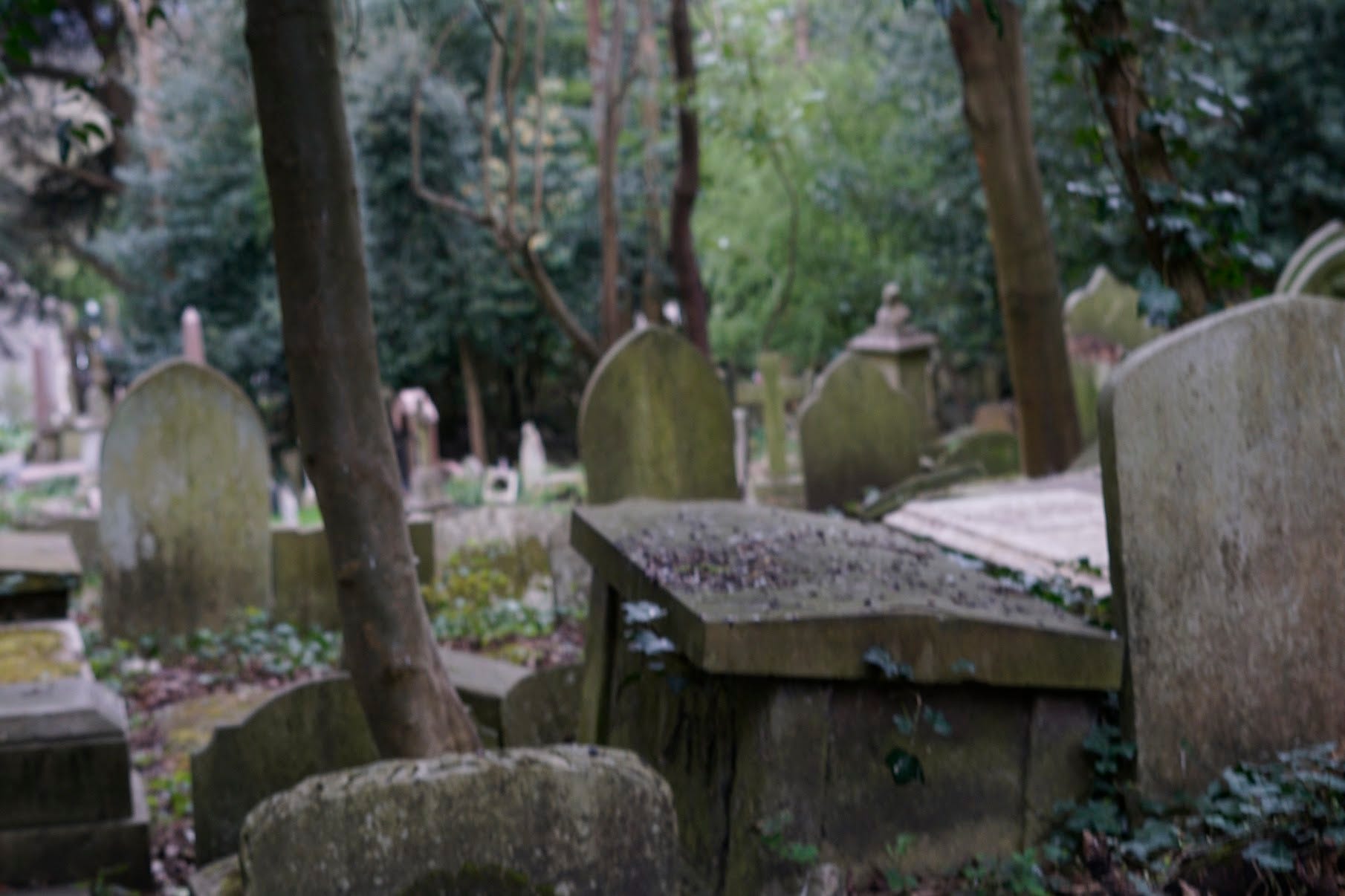
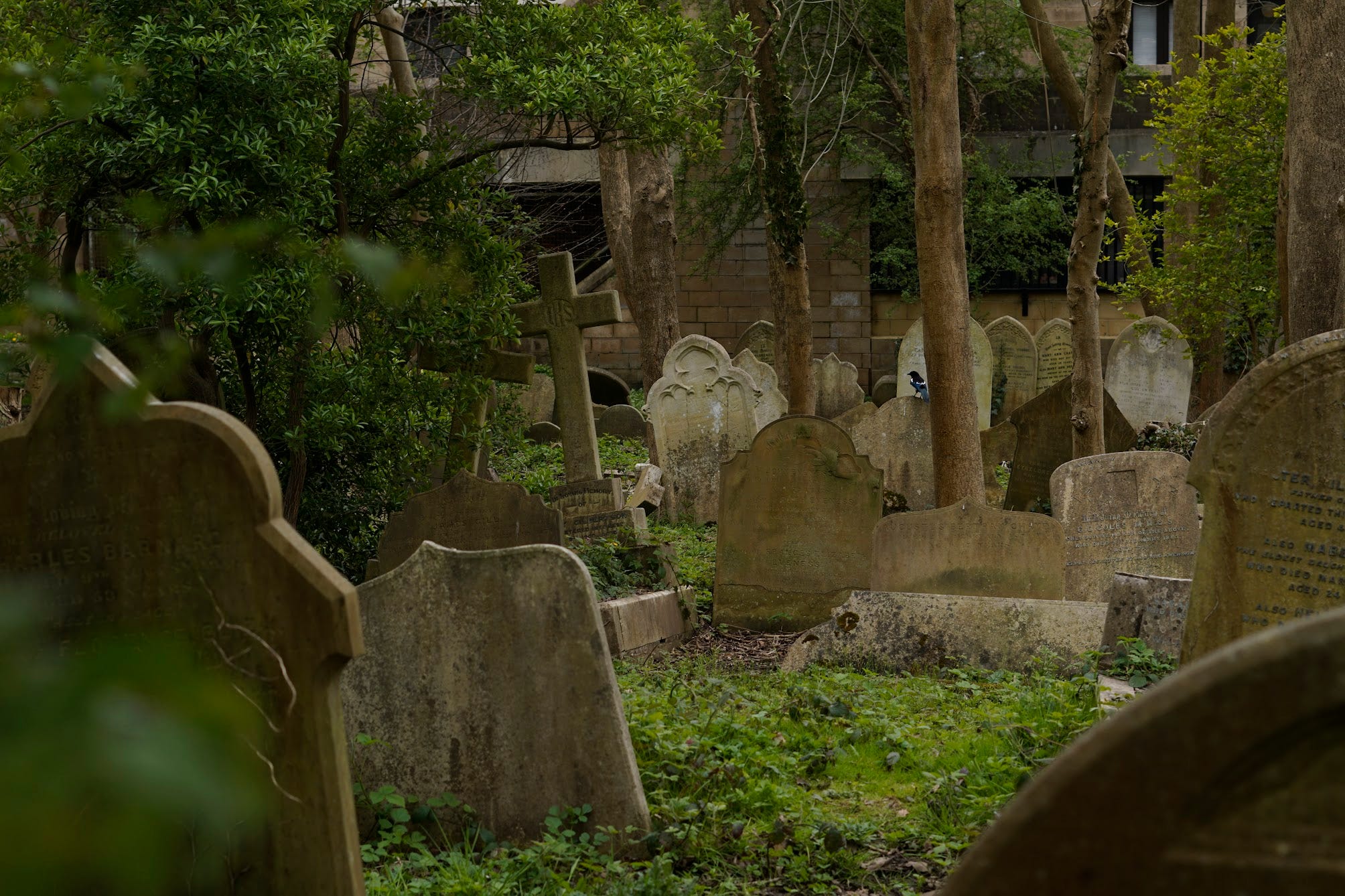
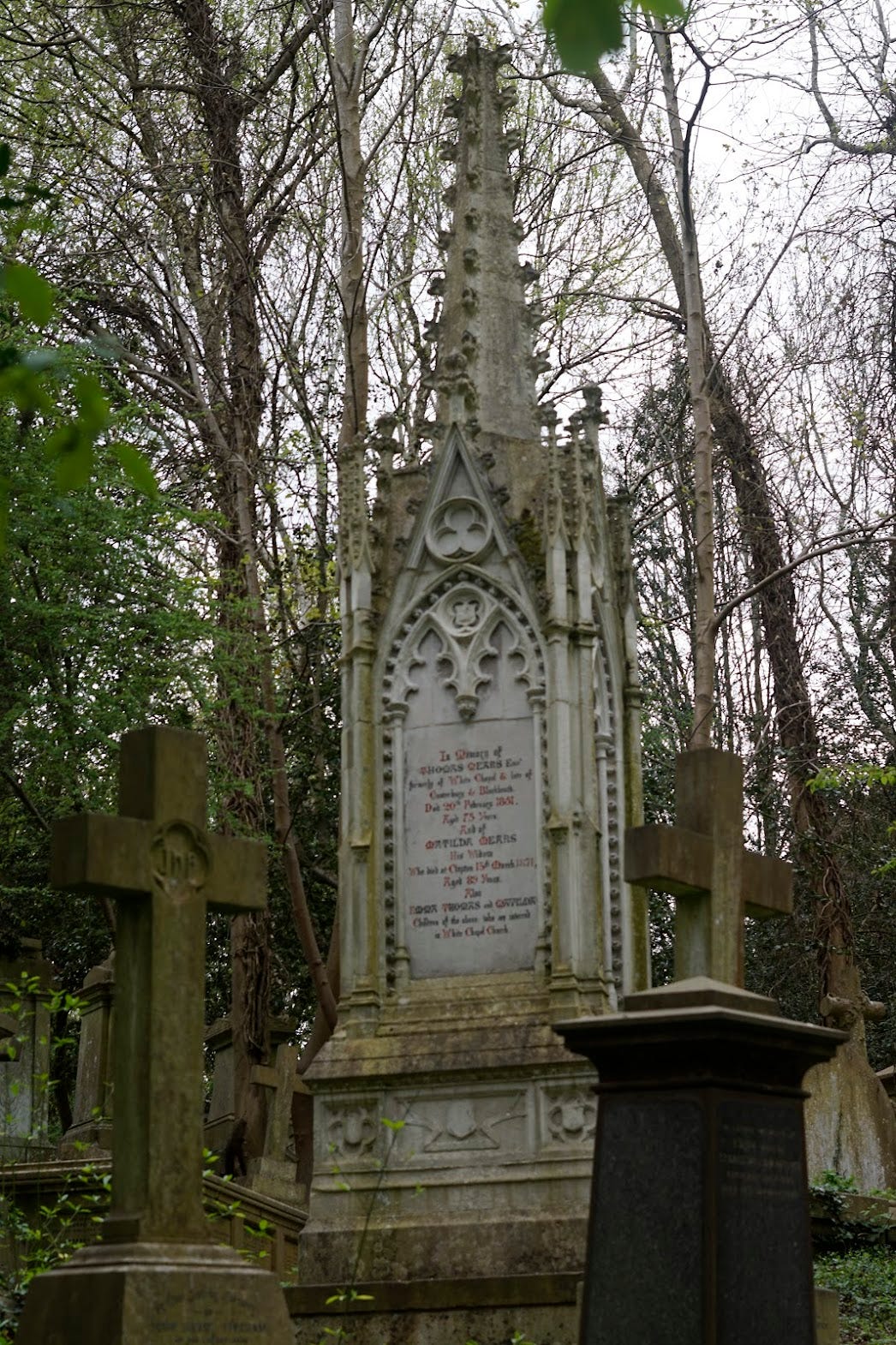
The cemetery was a city unto itself, necropolis more than graveyard. A suitable place for a vampiric fiend to make his lair…
I imagined there must be strange subterranean passageways beneath the rows and rows of lichen covered tombs, which housed both the dead and suspiciously eyed burrowing creatures.
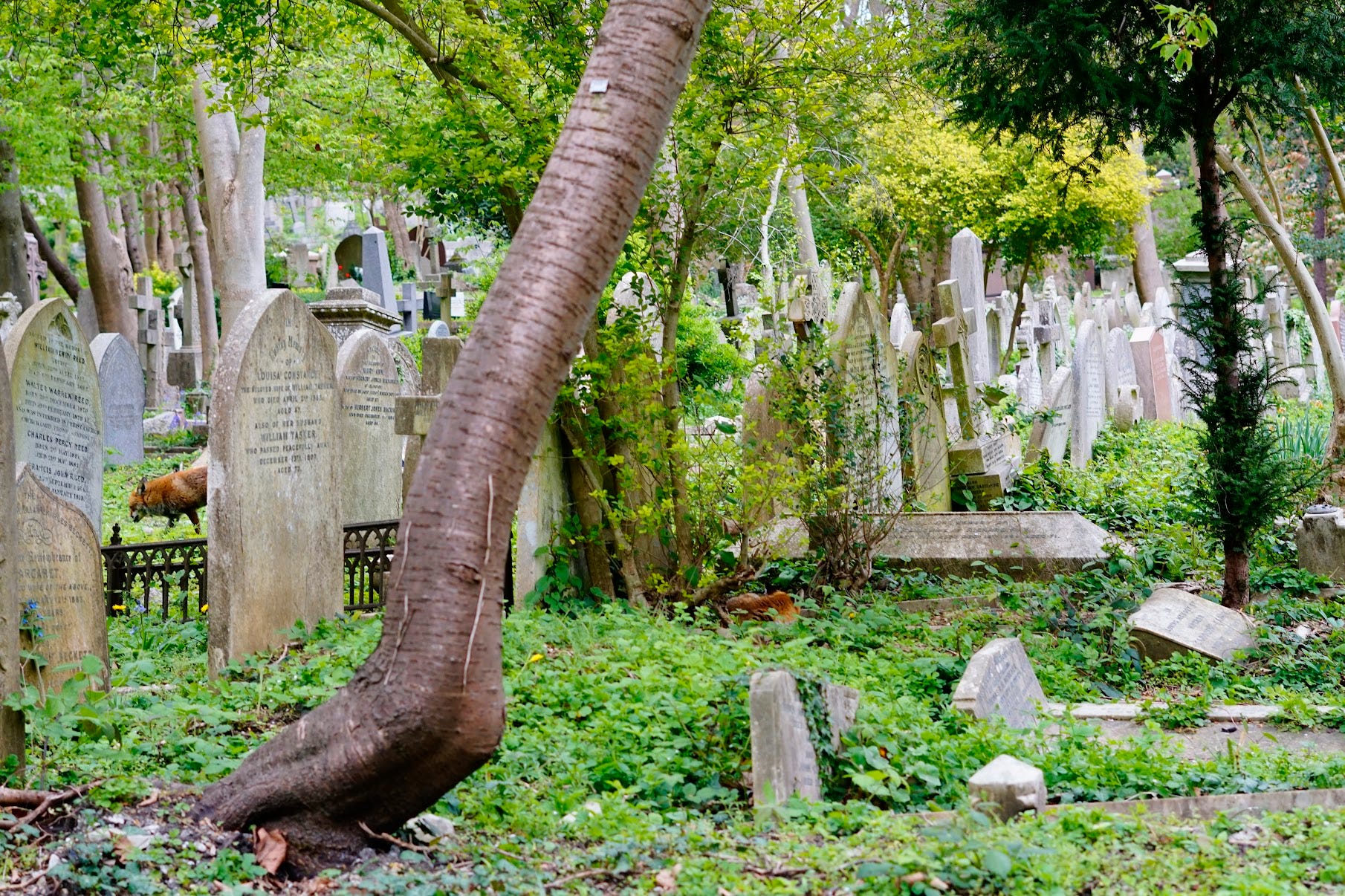
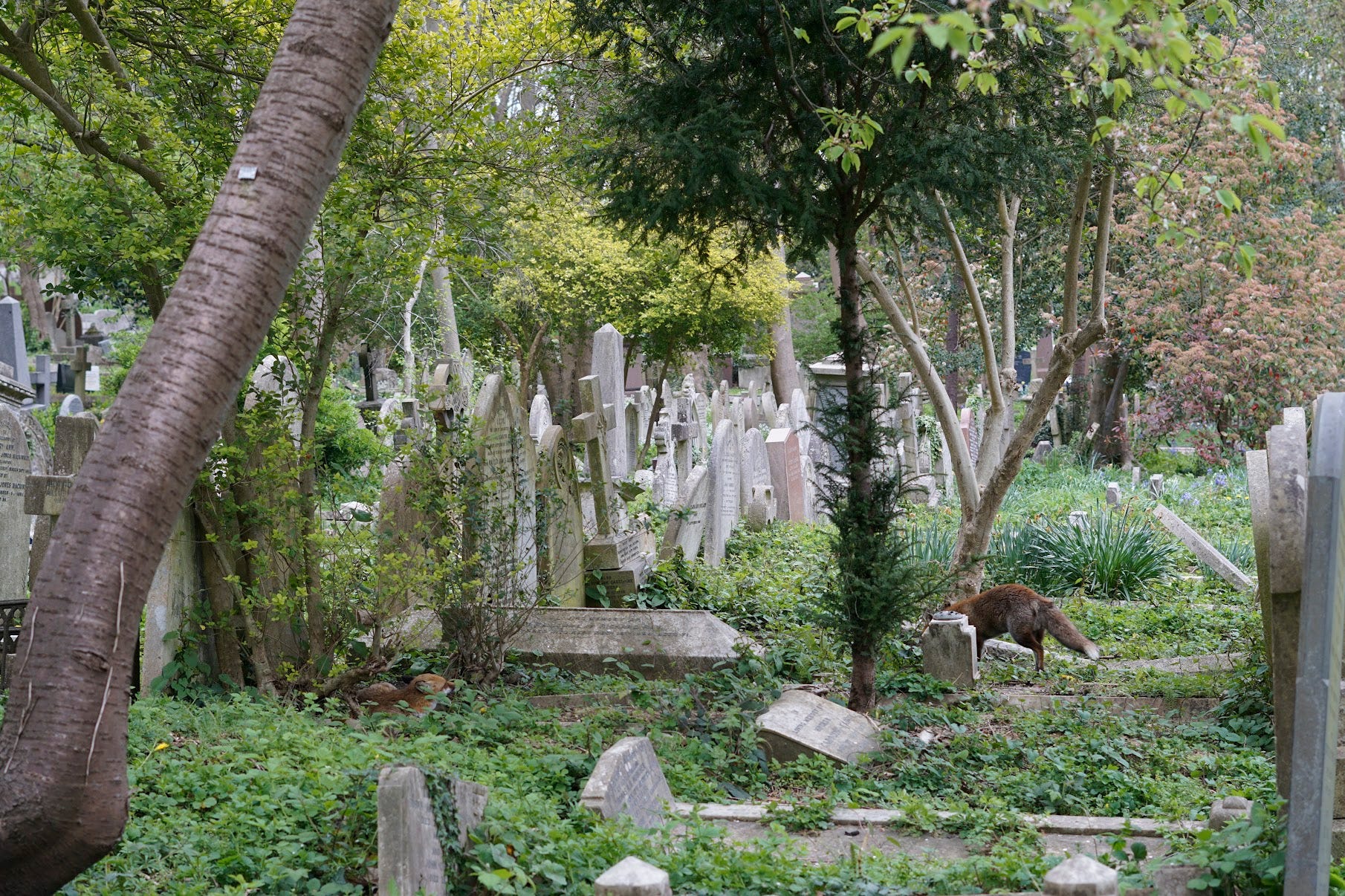
It was a white afternoon, sky bleached to match the tombs of the Victorian cemetery. A gray dusk approached at which the creatures emerged from their burrows beneath the crypts. Odd-eyed and burnt umber, the first fox I saw emerged.
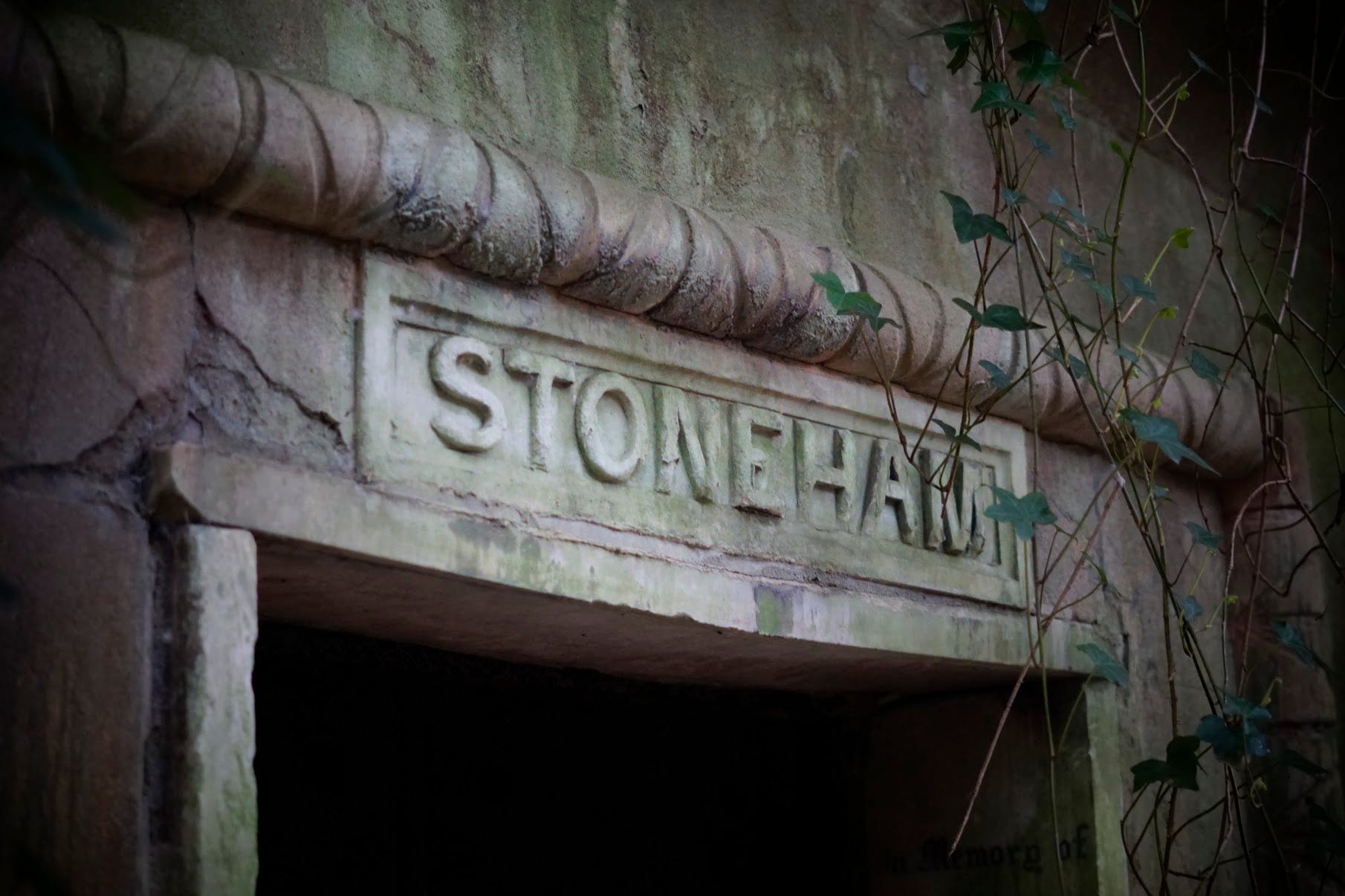
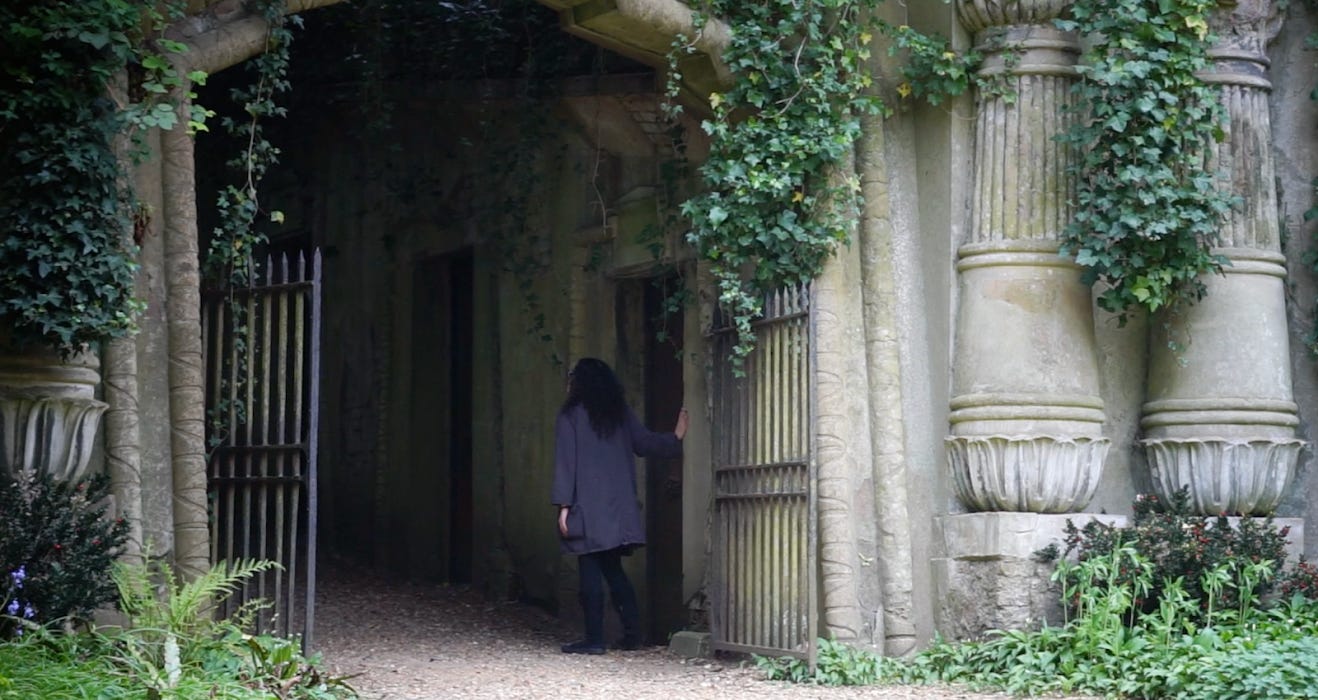
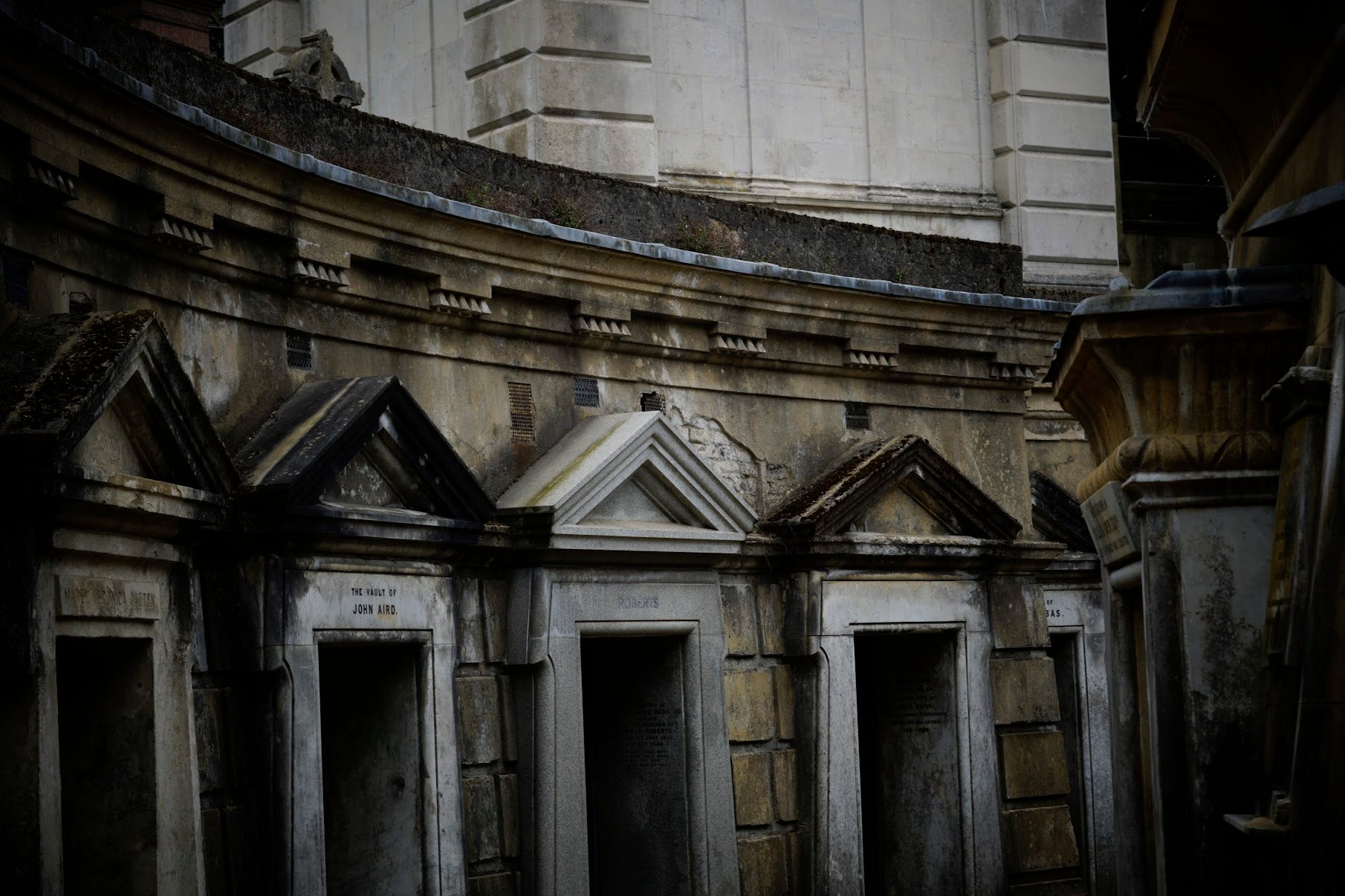
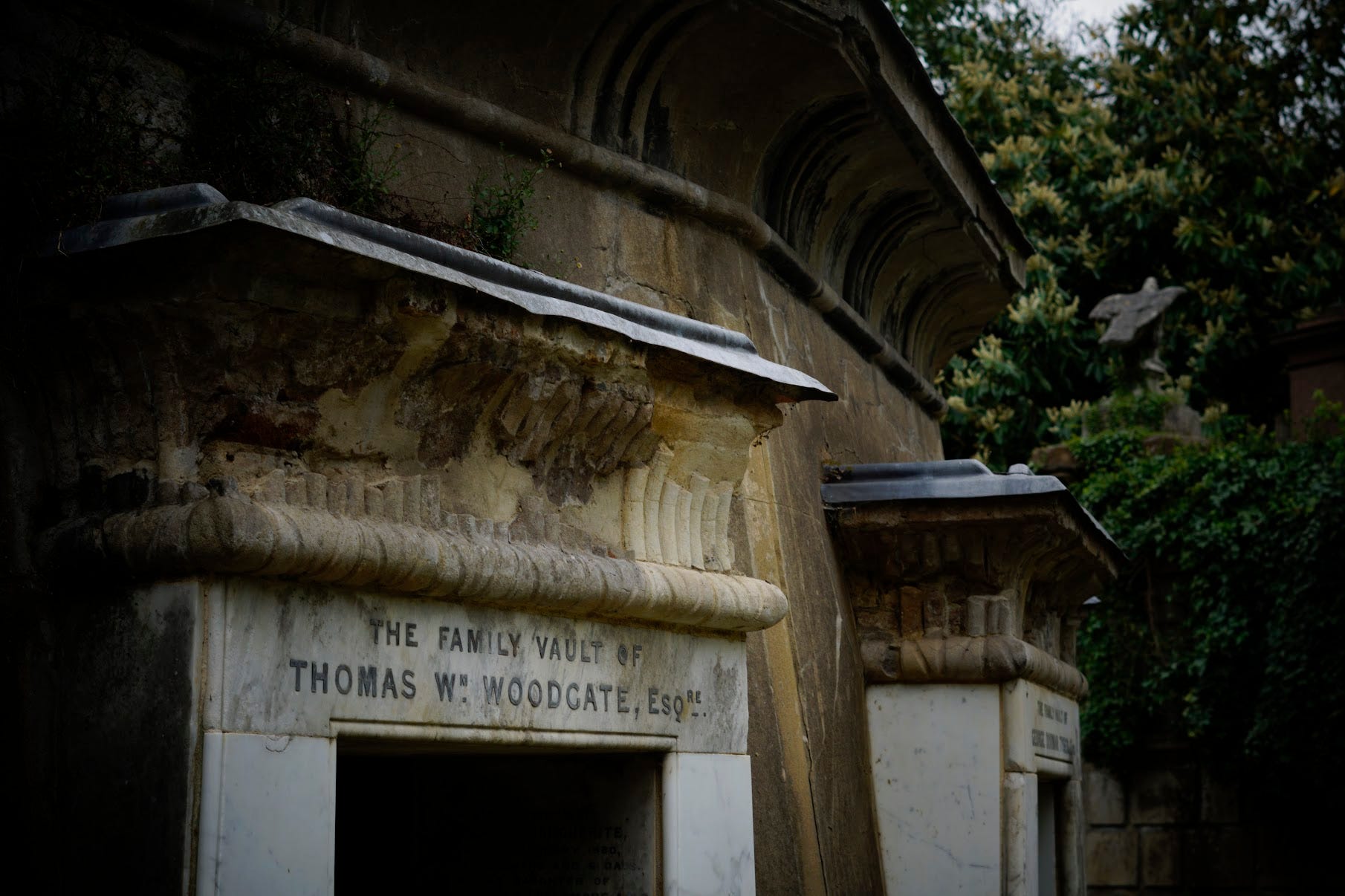
The Trickster beckoned, allowing me to catch sight of it before leading me off in a leisured gait as though intending to be spotted, but just spry footed enough that I glimpsed only the thick tail around each bend. I pursued the beast quietly up the stone staircase, but lost sight of him disappearing into the shrubbery and vine of the archway above the crypts lining the Egyptian Avenue to the circle of Lebanon. I glanced down through the ivy thickets at the pathway below. The auspice had led me back to the site of the vampyre.
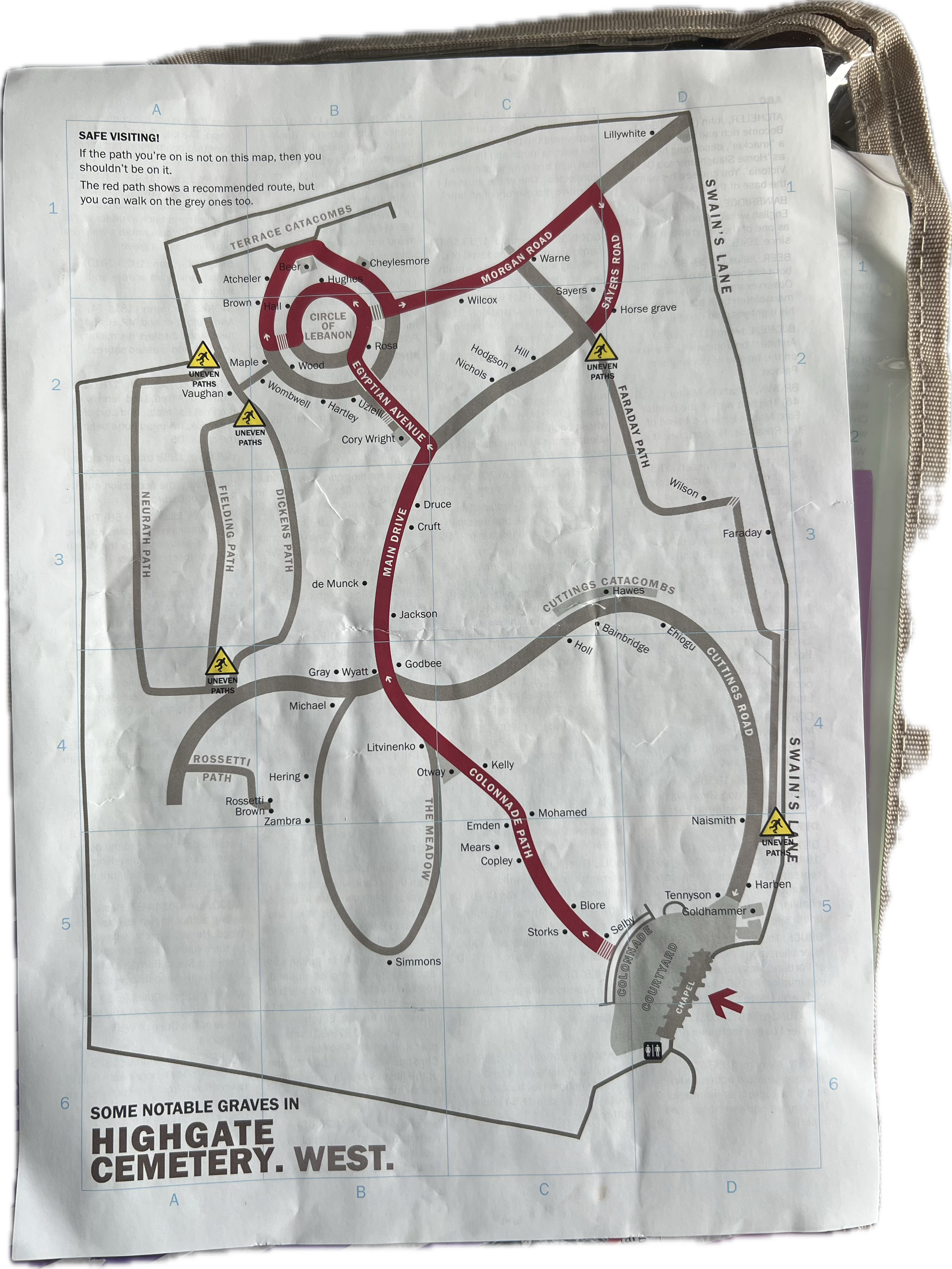
My map of the Victorian Cemetery I received at the visitor center
It had been daylight when I’d arrived and upon my departure; I had not truly thought I might catch a glimpse of the revenant, but I hoped still that my presence in the space would induce some inciting event…that like one of the alleged victims of the find, upon my passage I might later dream of the red eyed figure reported to have lurked amongst the catacombs all those years ago. Even more so, I wished to partake in the sense of adventure wrought from quests taken to sites of age and mystery, an impulse I’d frequently had (and indulged) that I discovered was called legend tripping.
Increasingly, “legend tripping” (a term used by folklorists) is becoming popular. A “legend trip” is a visit to a site having a legend—typically about uncanny events there—the purpose being to test the legend or to otherwise engage it (Brunvand 1996, 437–440).1
I unwittingly found myself engaged in a form of folkloric mimesis, much like the men central to the tale that unfolded decades ago.
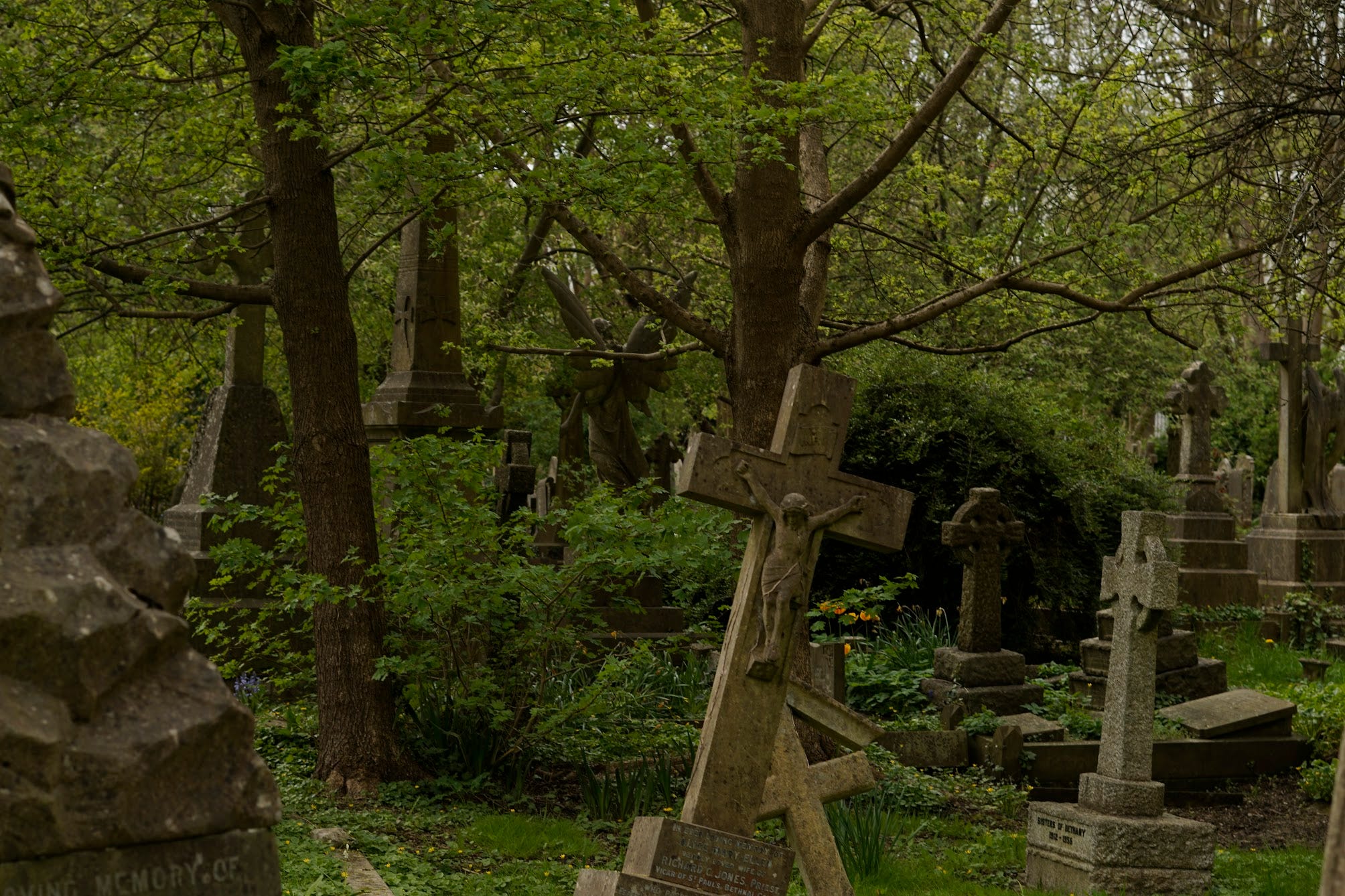
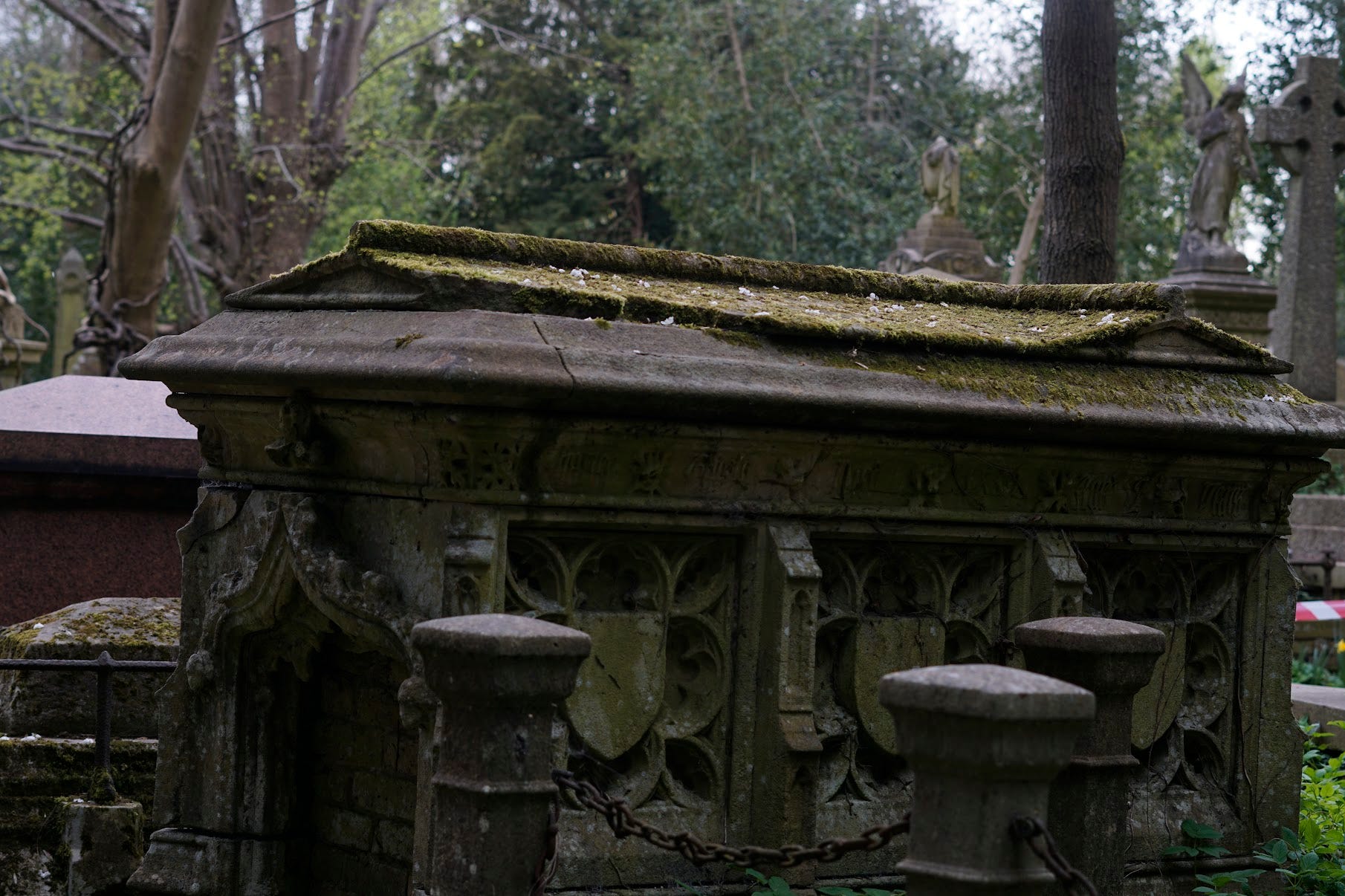
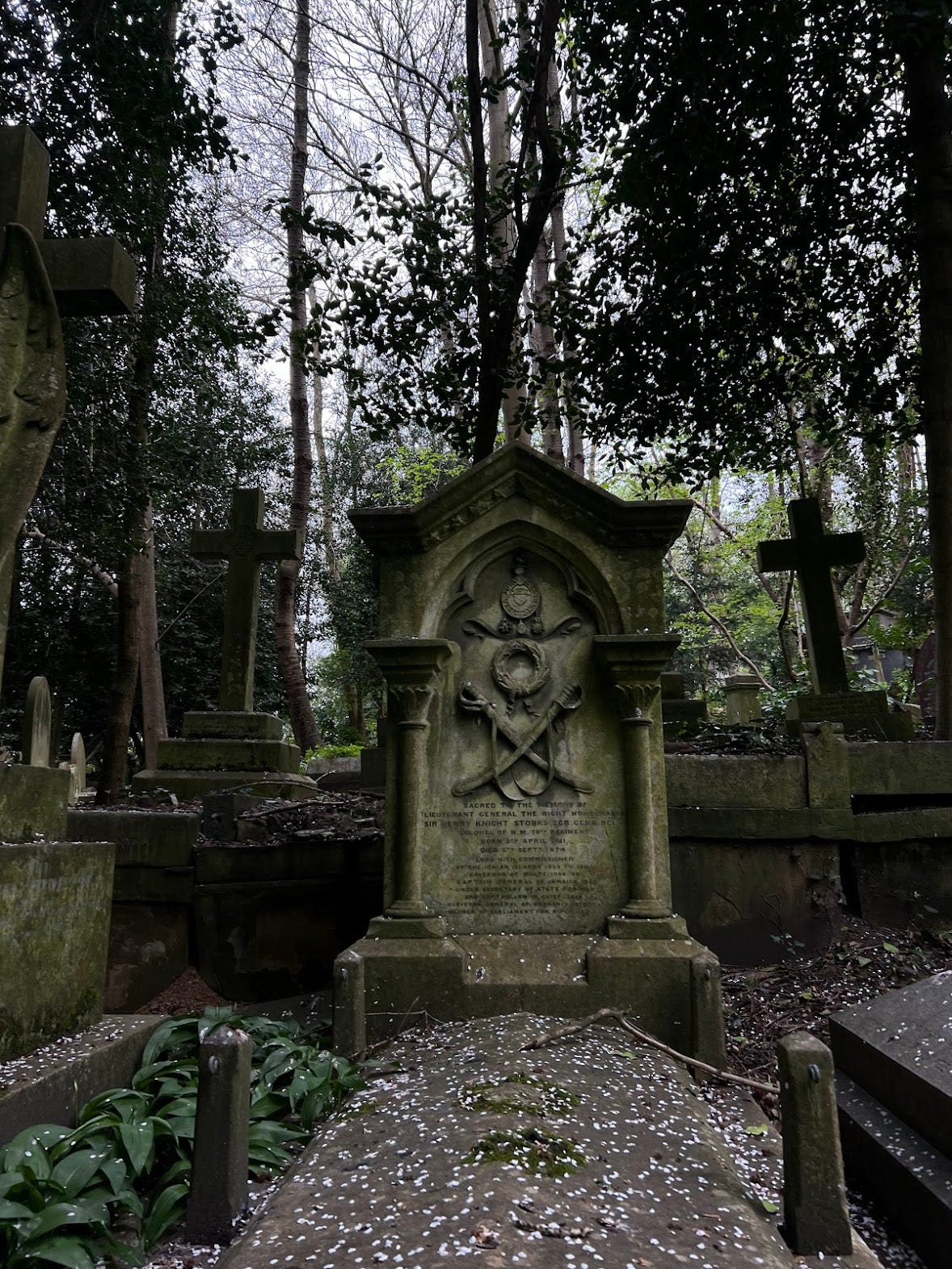
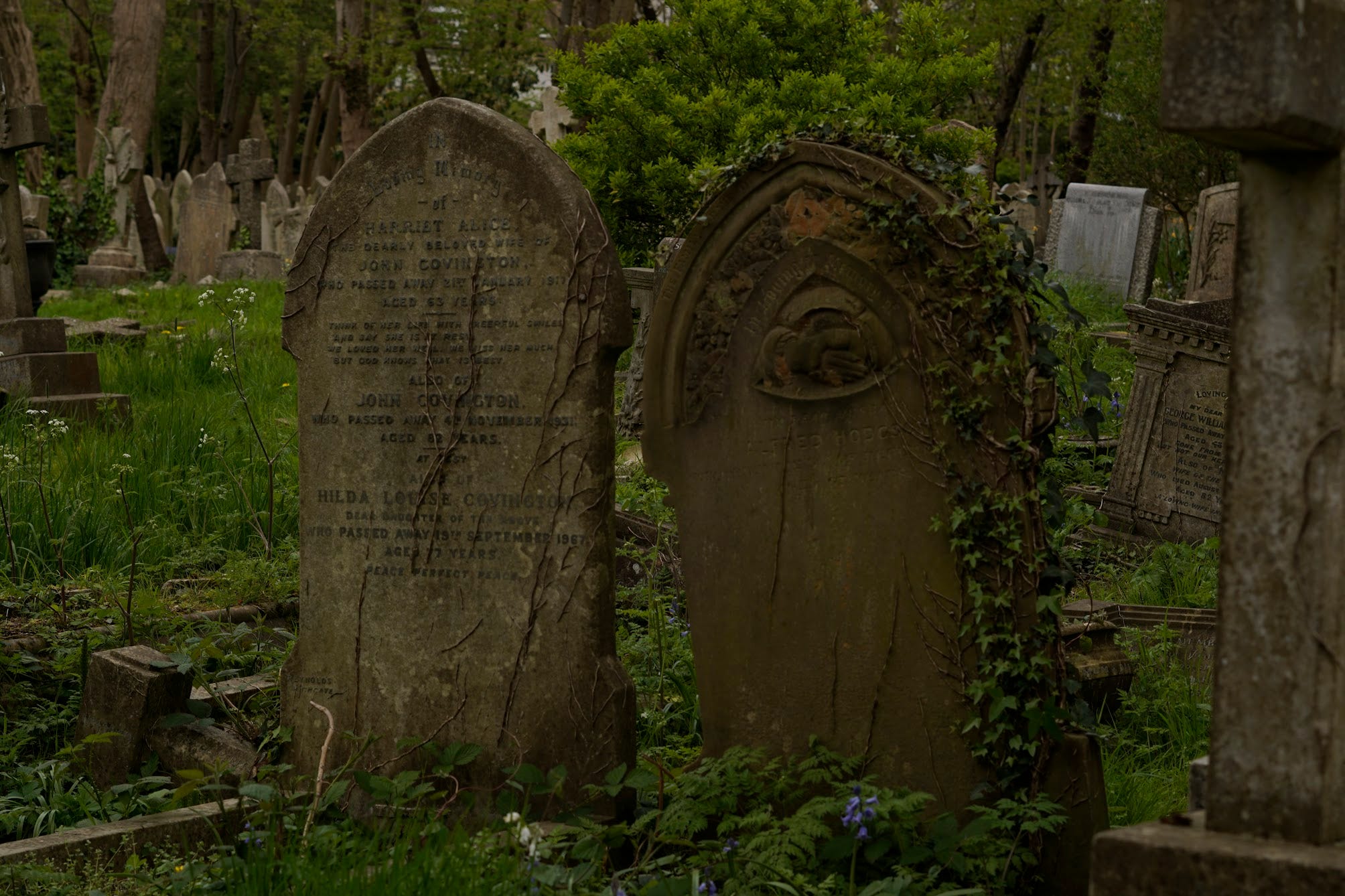
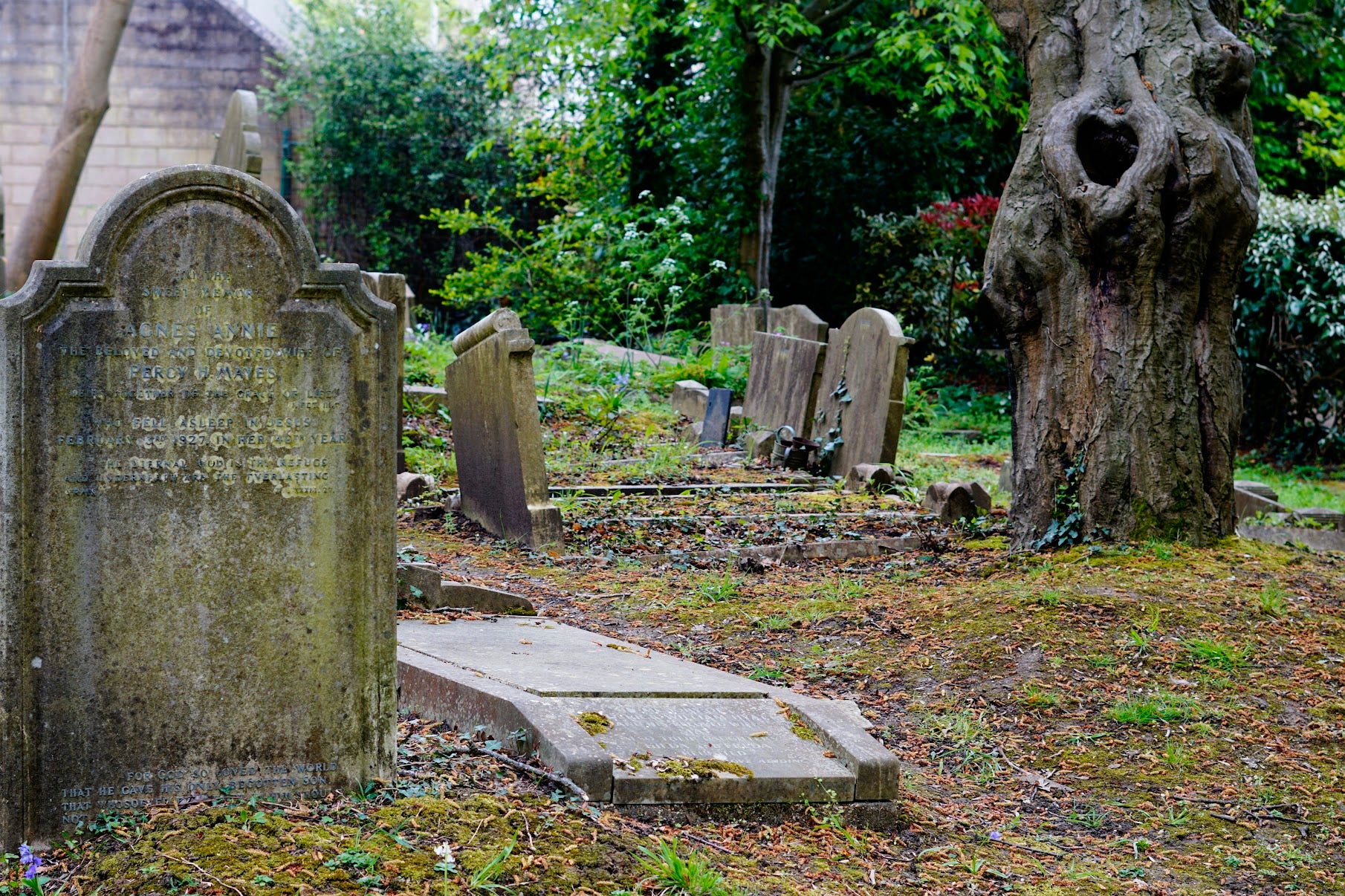
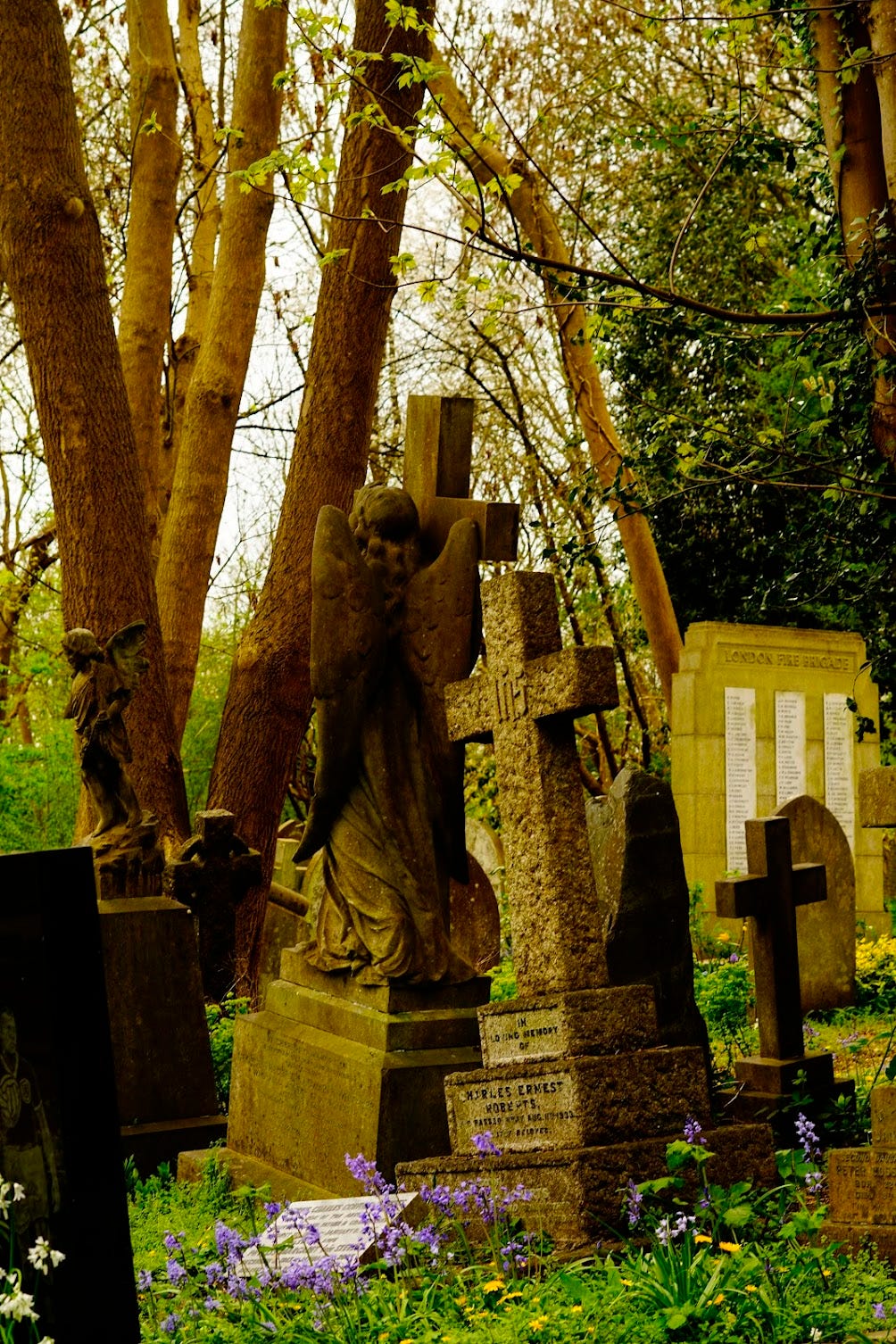
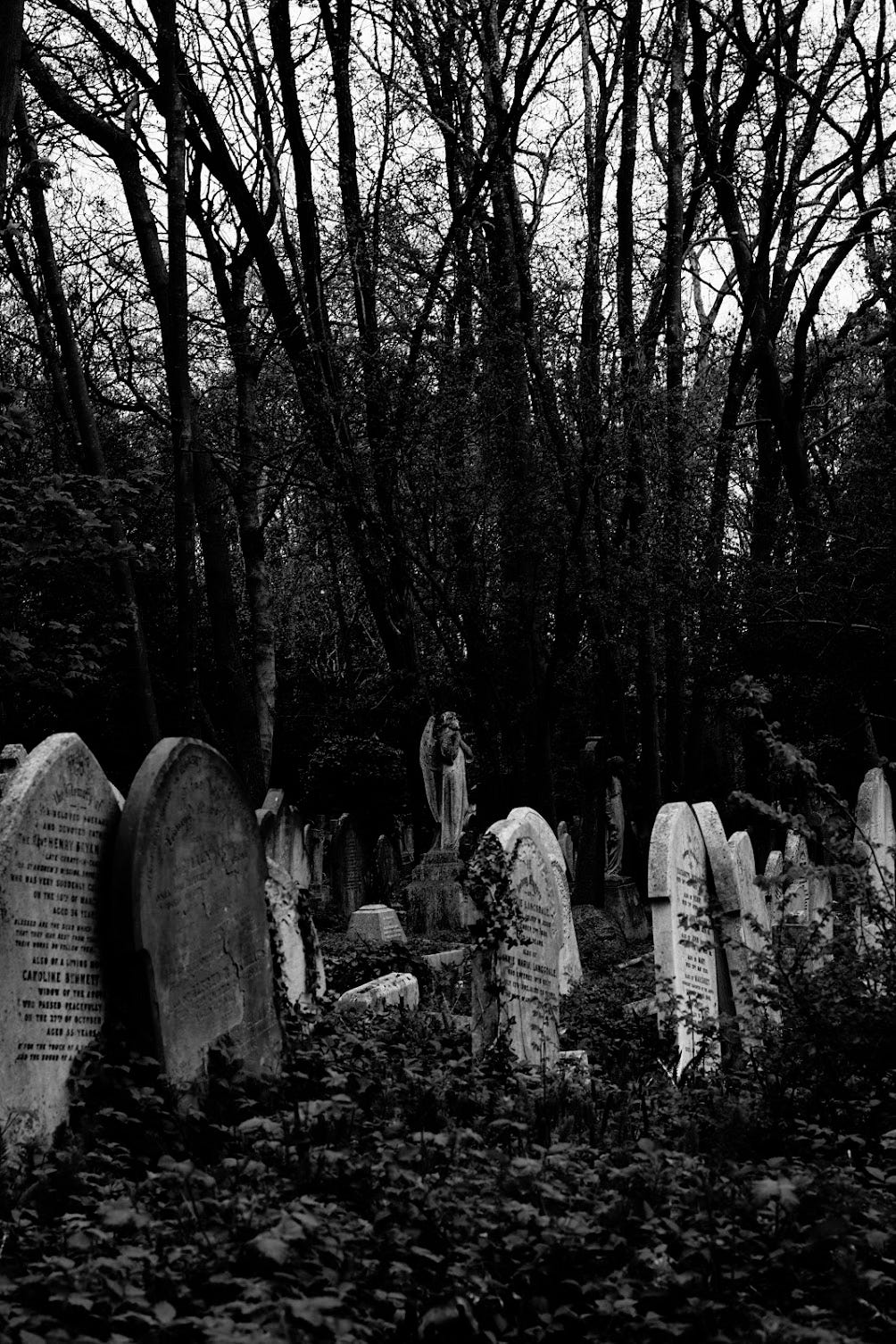
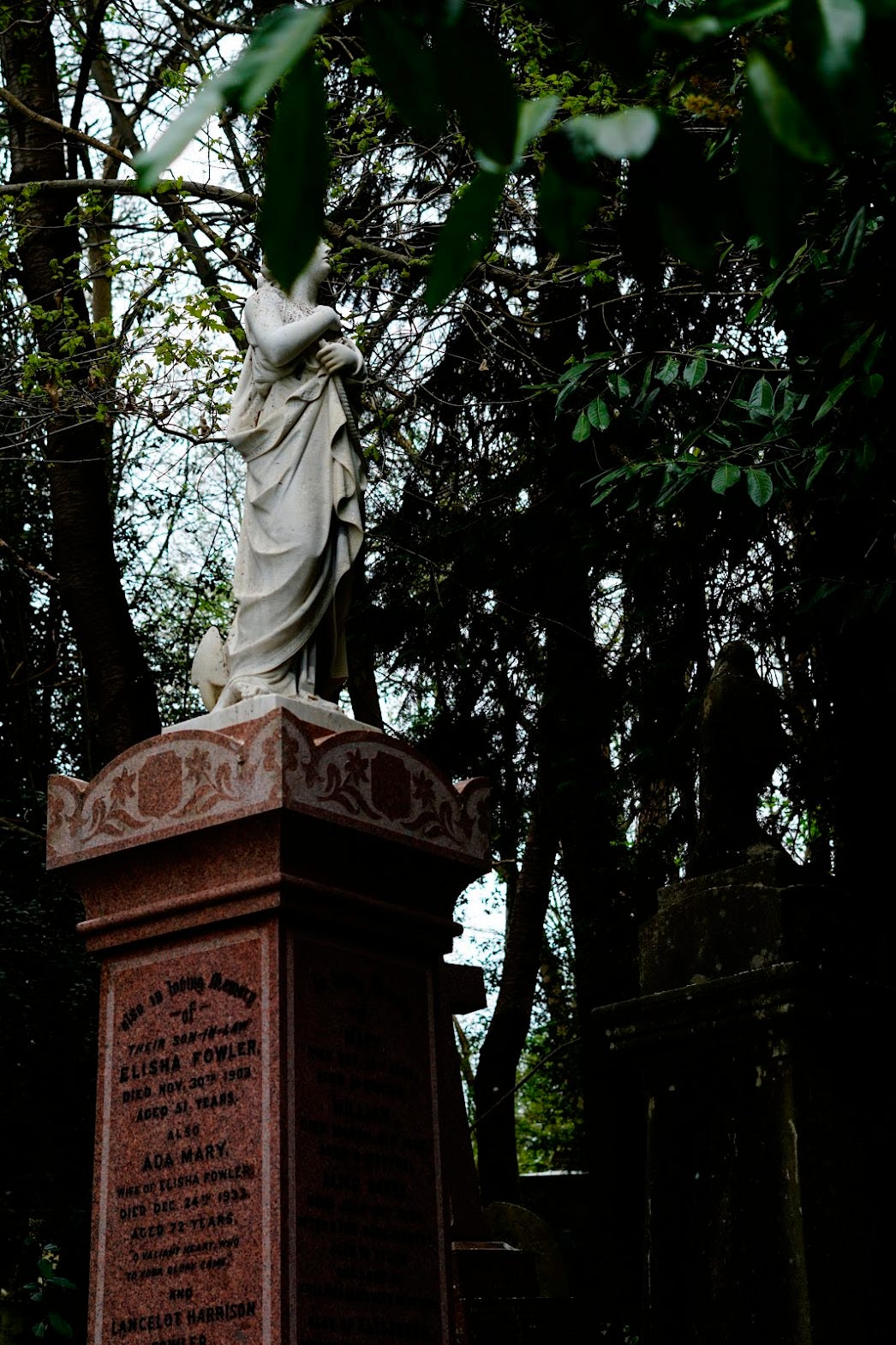
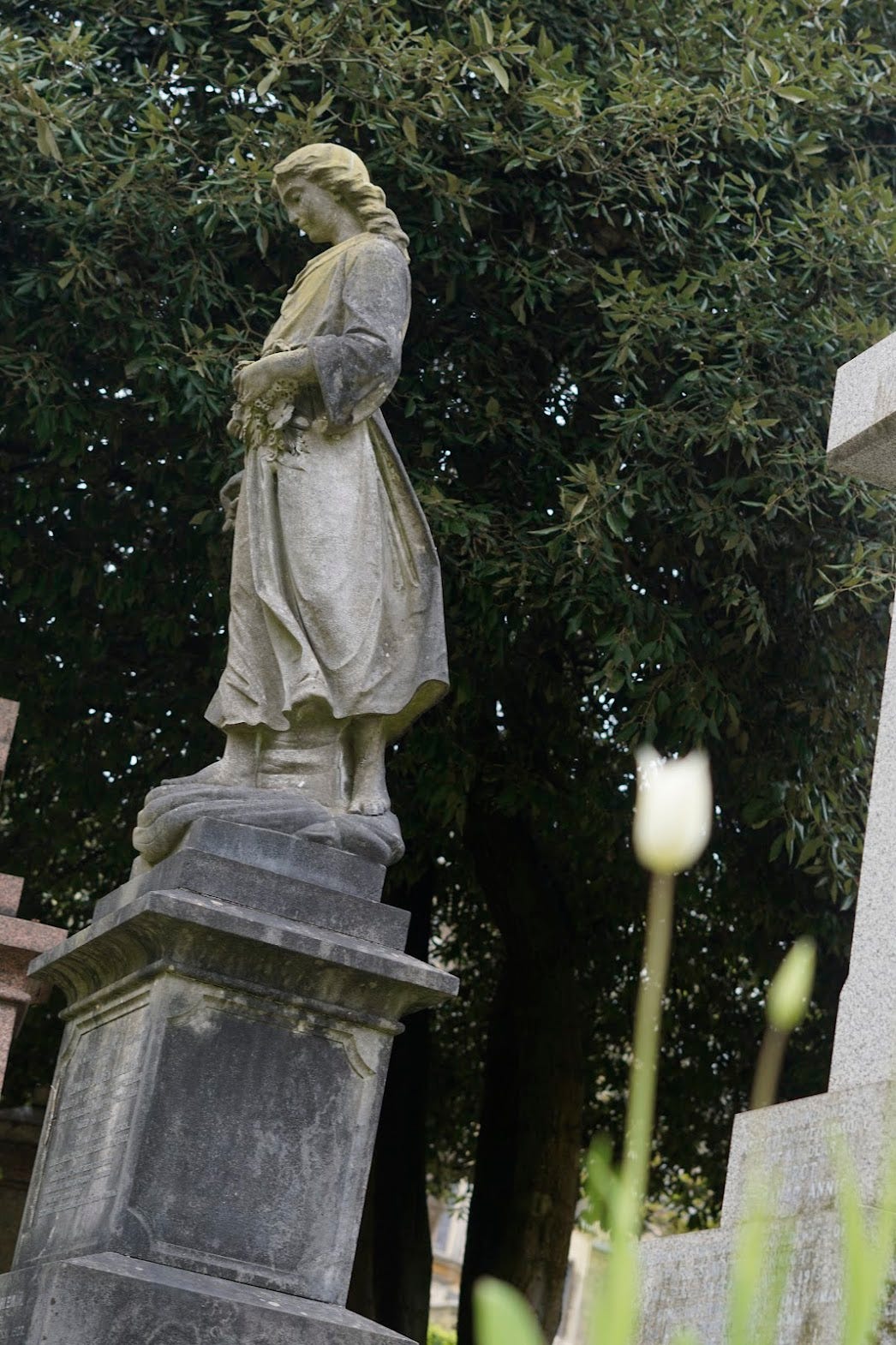
Petals of the white blooms surrounding the gravesites imparted upon the crypts as snow would; all was serene and solemnly springlike as I wove amongst sites of interment, spied upon by magpies and crows when I sat upon a bench with a cheddar sandwich. I was dwarfed by many monuments of the silent city, and it occurred to me that had I the second sight, the inhabitants of this place would entirely engulf me, the fox warrens a reminder that much of the populace was just below my feet.
Given the vastness of this place, I imagined its bowels would similarly reflect this, perhaps even to a greater extent. The city extended beyond the monuments visible to the wanderer into subterranean tunnels and catacombs, perhaps other more illicit passages. In many ways, it was an optimal venue at which dueling occultists to partake in magical battle, (a surprisingly frequent occurrence in London, I’d found) and an even more so, an ideal lair for the undead.
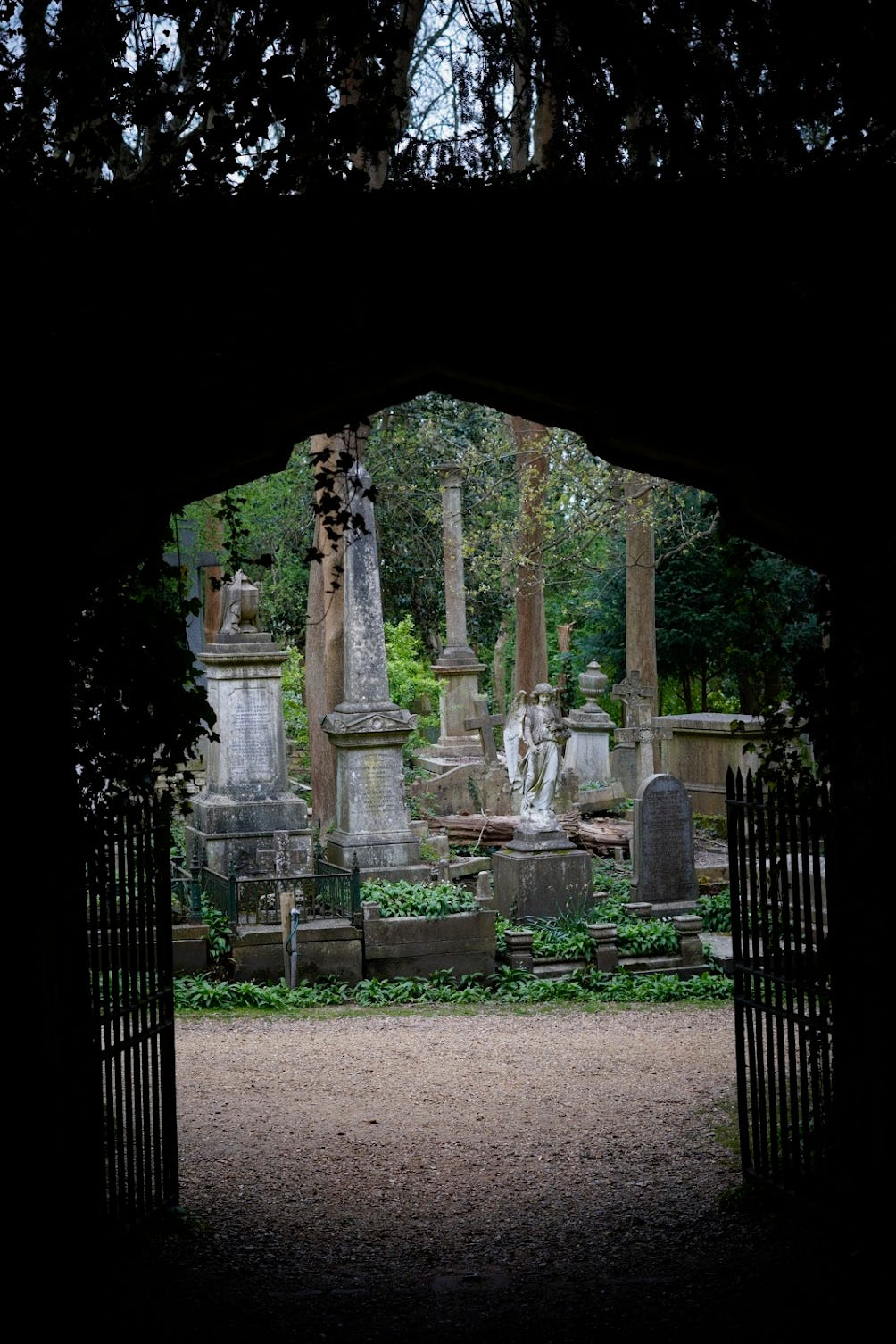
I wadded the cardboard that had encased my meal into the bin and set off once again, deeper into the labyrinthine plot of the dead.
Amidst the various fiends spotted, there was one in particular that especially captured the public imagination. Reports varied, but the consistent theme of the sightings implied a large specter, shadowy, often with red eyes, a distinctly male presence. The nature of the attacks described were both physical and psychical in nature; mysterious fang-marks following strange episodes of somnambulism involving young girls (sound familiar?), a shadowy figure with mesmeric abilities, animals found exsanguinated.
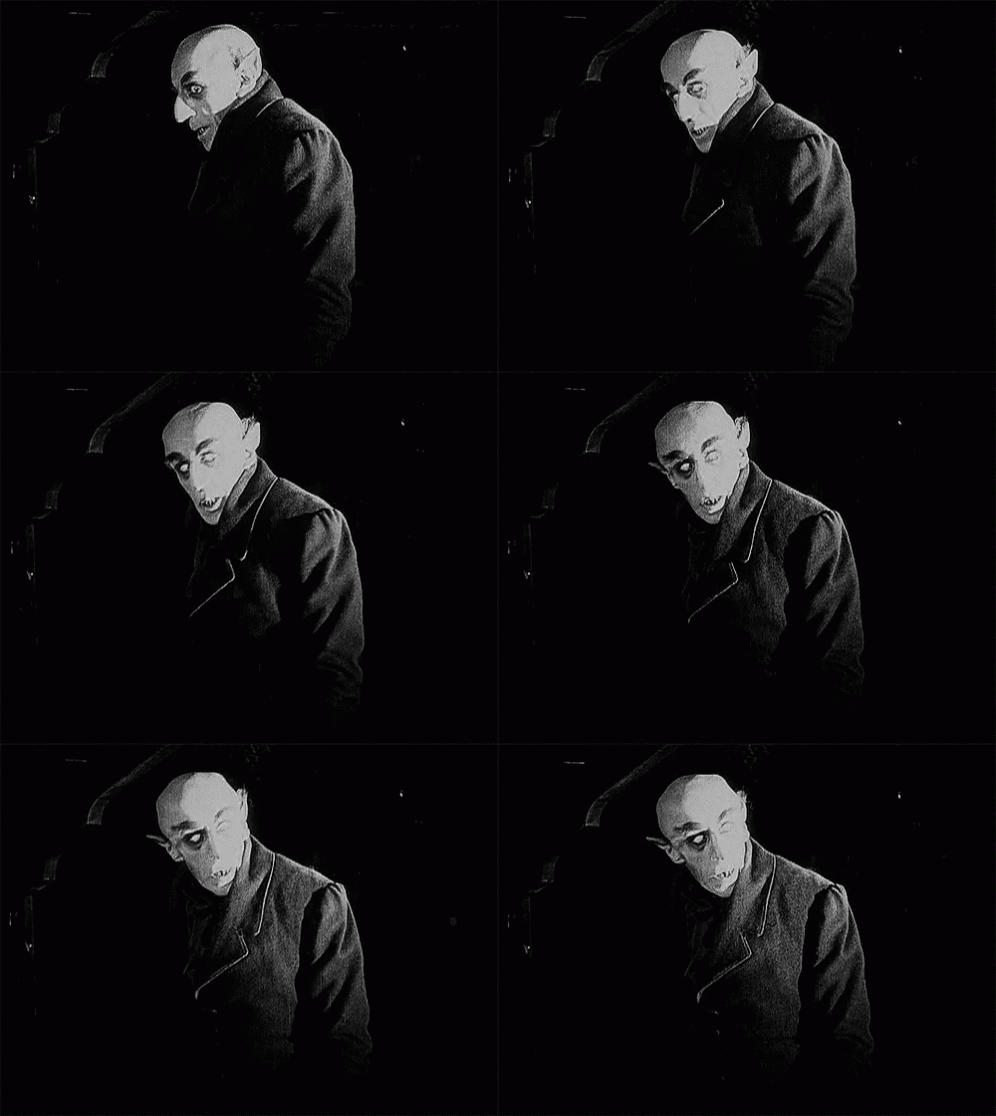
I did not encounter anyone matching this description, I fear
Two paranormal investigators at the time took to the tale, each with their own interpretations of the suspicious instances of psychic and physical attack. President of the British Occult Society Seán Manchester claimed that the apparition was a vampire in the more popularly identifiable sense: he claimed the revenant of highgate was the reanimated corpse of a fifteenth century Romanian nobleman who had been transported to England in the early 18th century before the conception of Highgate Cemetery, and later reanimated by some rituals allegedly performed in the area. In his telling, Manchester claimed that the ghoulish fiend, a “vampire king of the undead” had all the trappings of the Gothic specter of Count Dracula; mesmeric influence, red eyes, the ability to drain the vitality of his victims, and an apparent penchant for preying on young women.
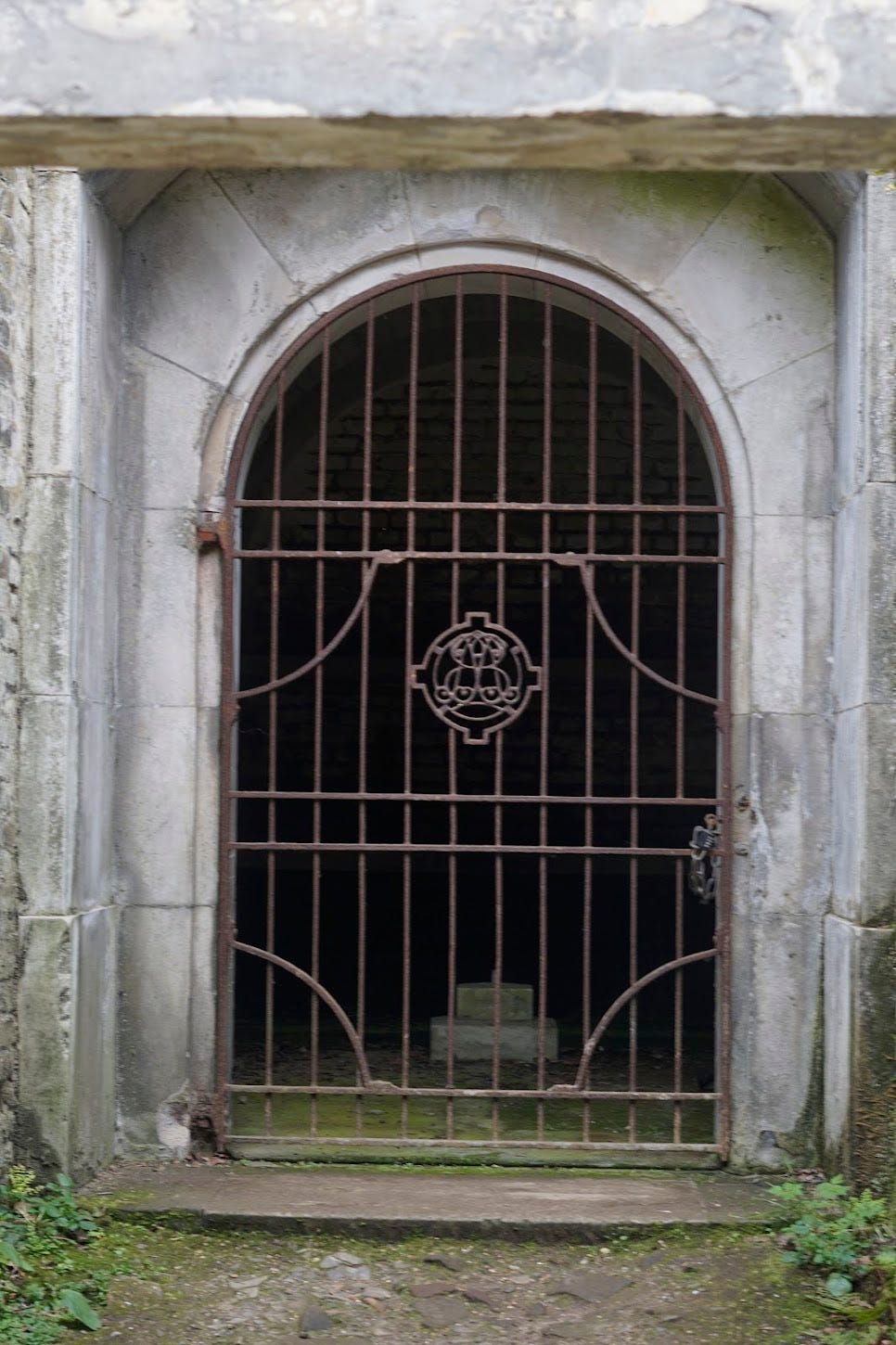
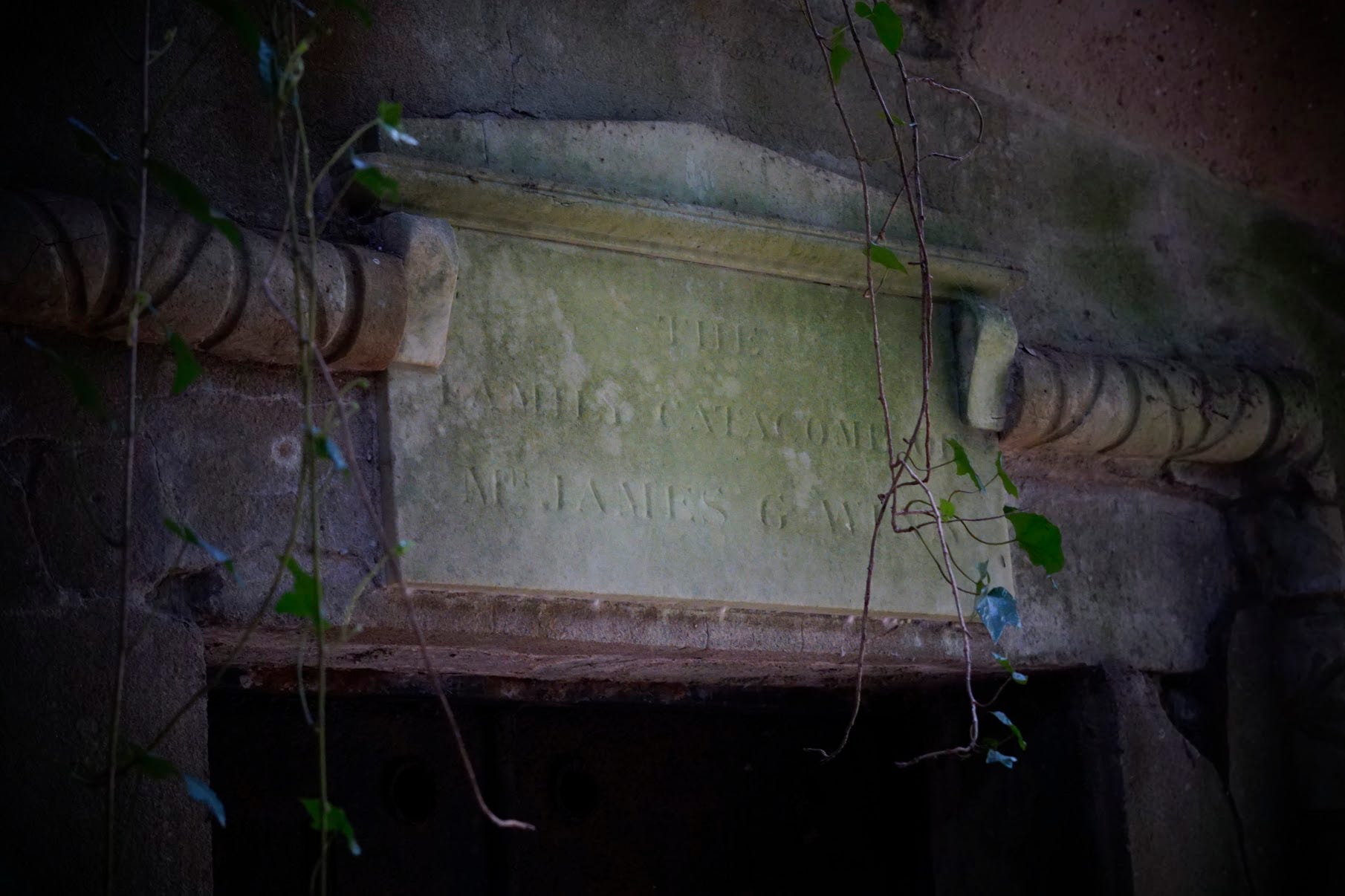
I’d initially found the design on this gate intriguing and snapped a picture, unaware that this is the tomb where Manchester accounts that “Luisa” sleep walked under the thrall of the vampire.
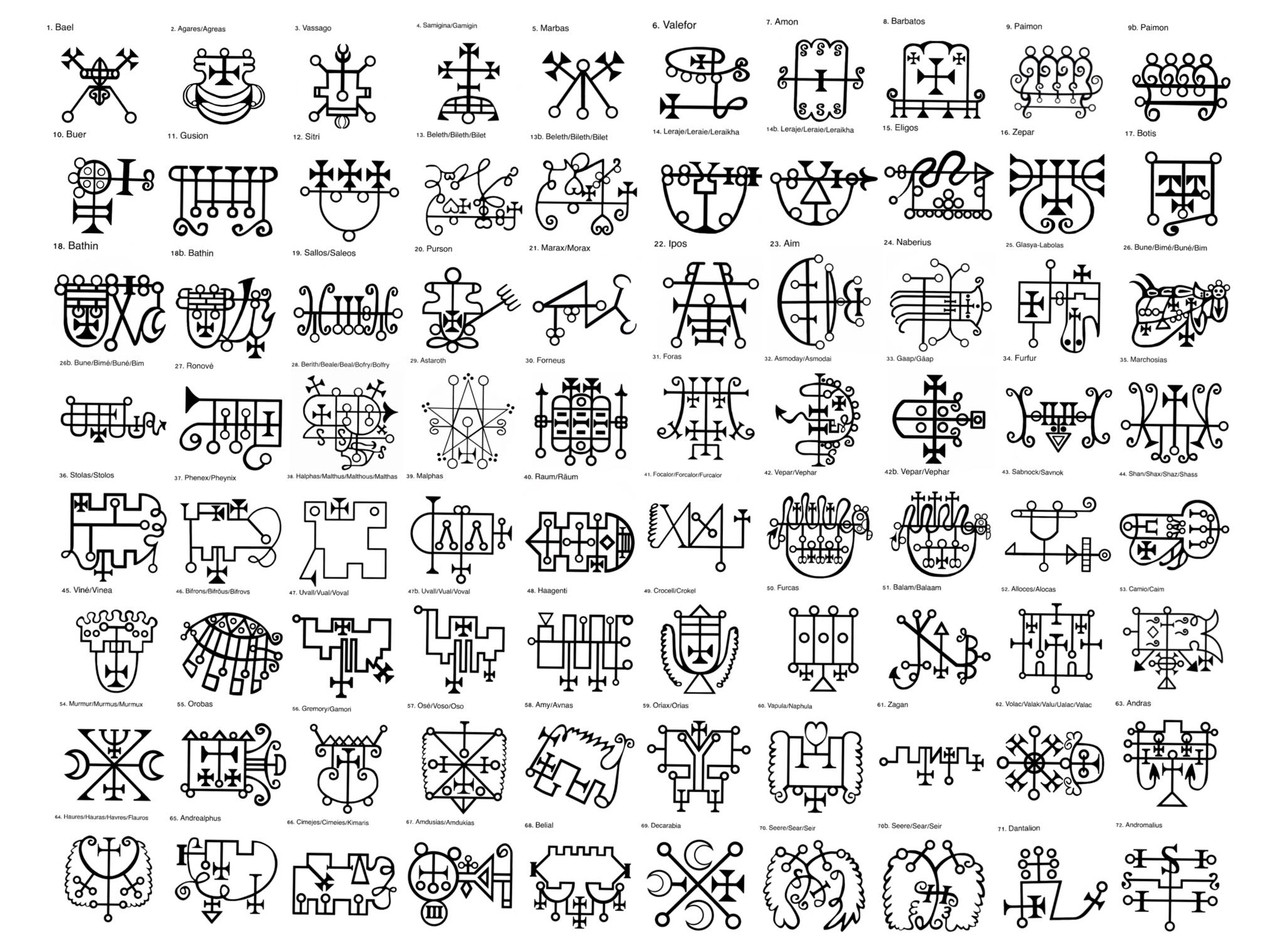
I found the seal on the gate rather reminiscent of the seals Ars Goetica
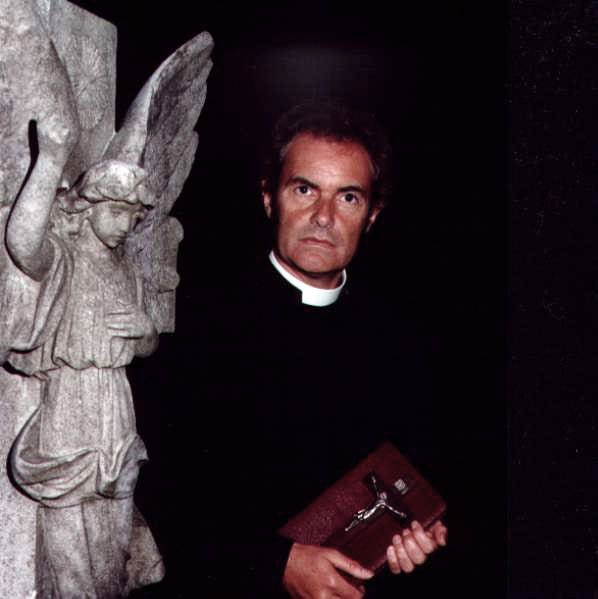
© Seán Manchester
Within this framing, Manchester likened himself to a sort of Van-Helsing, the archetypical vampire slayer, claiming to have exorcised the vampire in the Circle of Lebanon, a circular courtyard lined by vaulted catacombs cut into the hillside around an ancient cedar tree. Many though that one of these catacombs led to a subterranean tunnel system in which the vampire dwelled. Manchester claimed to have eventually exorcised the vampire by driving a stake through the heart of a corpse found first in a vault in the cemetery with the aid of a psychic, then again in an abandoned mansion. Upon finding the black coffin housing the corpse, Manchester said of it: “It was only when we discovered – in the putrid chamber of that tomb in August 1970 – what we did and looked upon the horrific countenance of what was inside, that we had absolute confirmation of what we were dealing with.”2
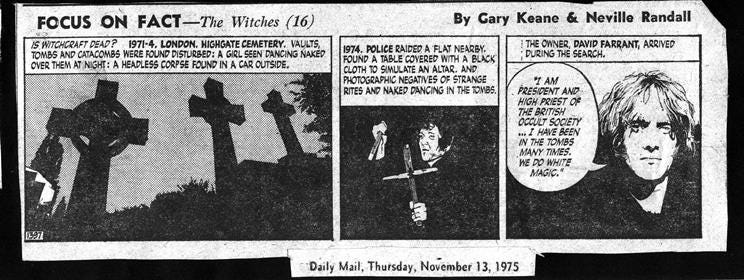
By contrast, his rival David Farrant argued that the being was not a wraith rising from his tomb to prey upon the living, but a malevolent non-human entity that perhaps garnered its power from a ley line Farrant claimed to have run through the circle of Lebanon. He claimed to have found ritual affects that implied the being might have been awakened by “Black Magic” rituals from a state of dormancy it had remained in since the victorian era.
Farrant made his own attempts to banish the presence, which he alleged attacked a member of his party, seizing a psychic by the neck in the midst of a ritual they’d preformed to ascertain the nature of the entity, which he believed traveled along the ley-line rather than being a vampire.
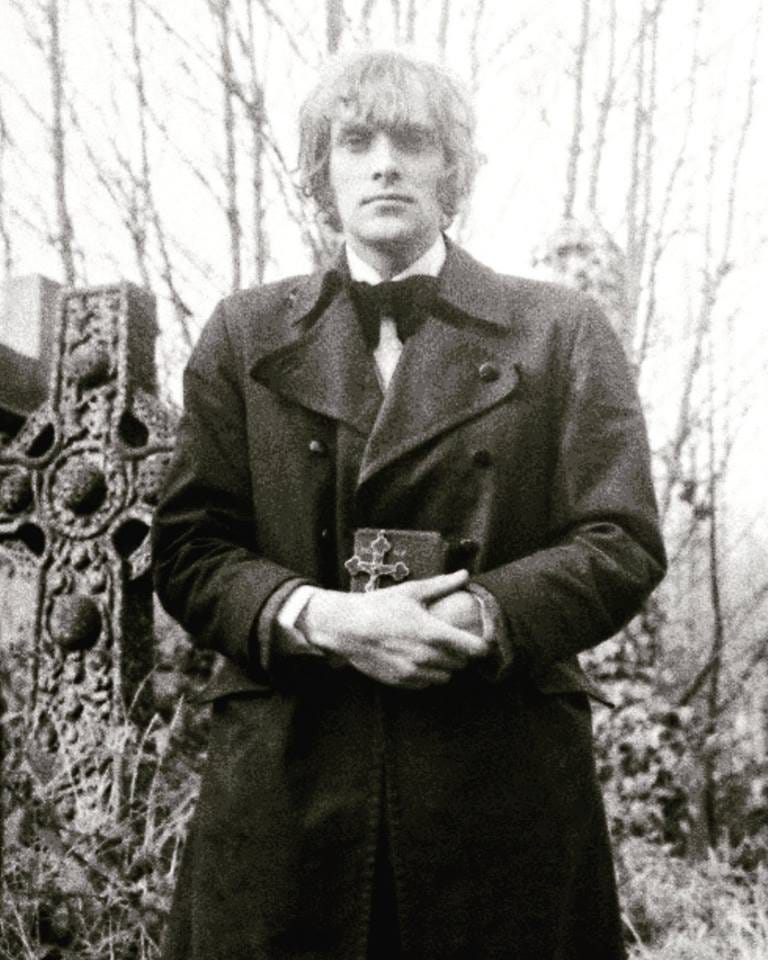
David Farrant, who I will most certainly take fashion inspiration from, if nothing else
Copyrighted pictures of the symbols that David Farrant claims to have found in the Cory-Wright Mausoleum :
https://davidfarrant.org/gallery/black-magic-in-highgate-cemetery/
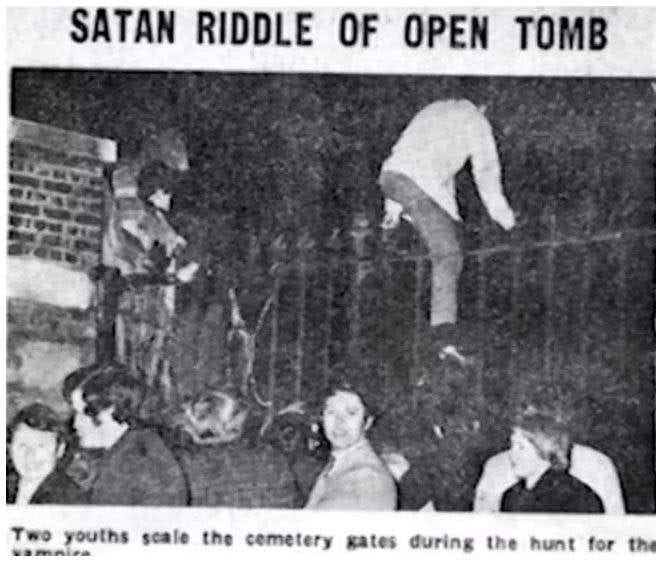
The feud between the two vampire hunters led to a public frenzy— amateur vampire hunters following the story took to the cemetery with crucifixes and stakes committing grave acts of vandalism and corpse desecration.
“What are you pointing at?”
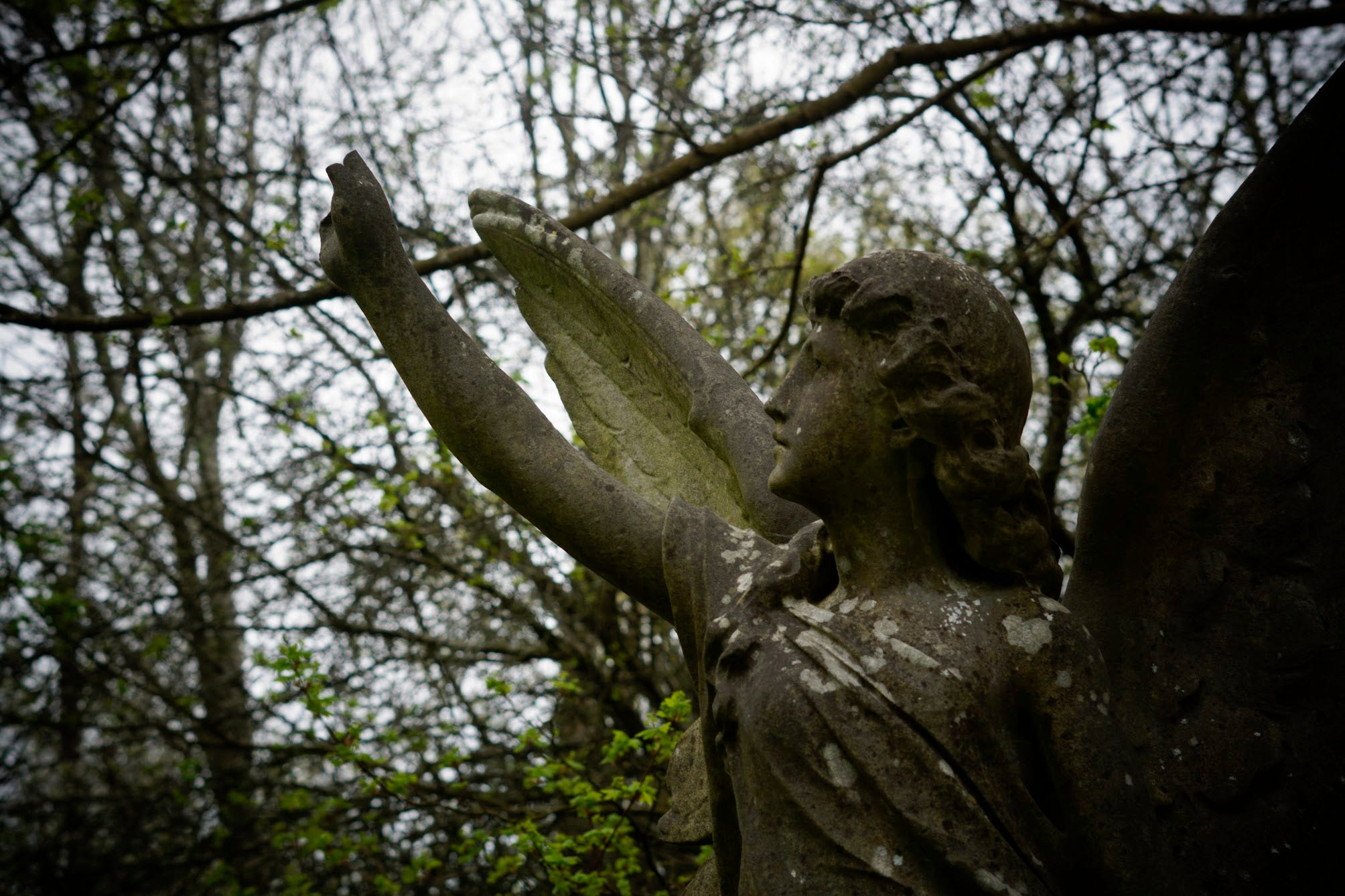
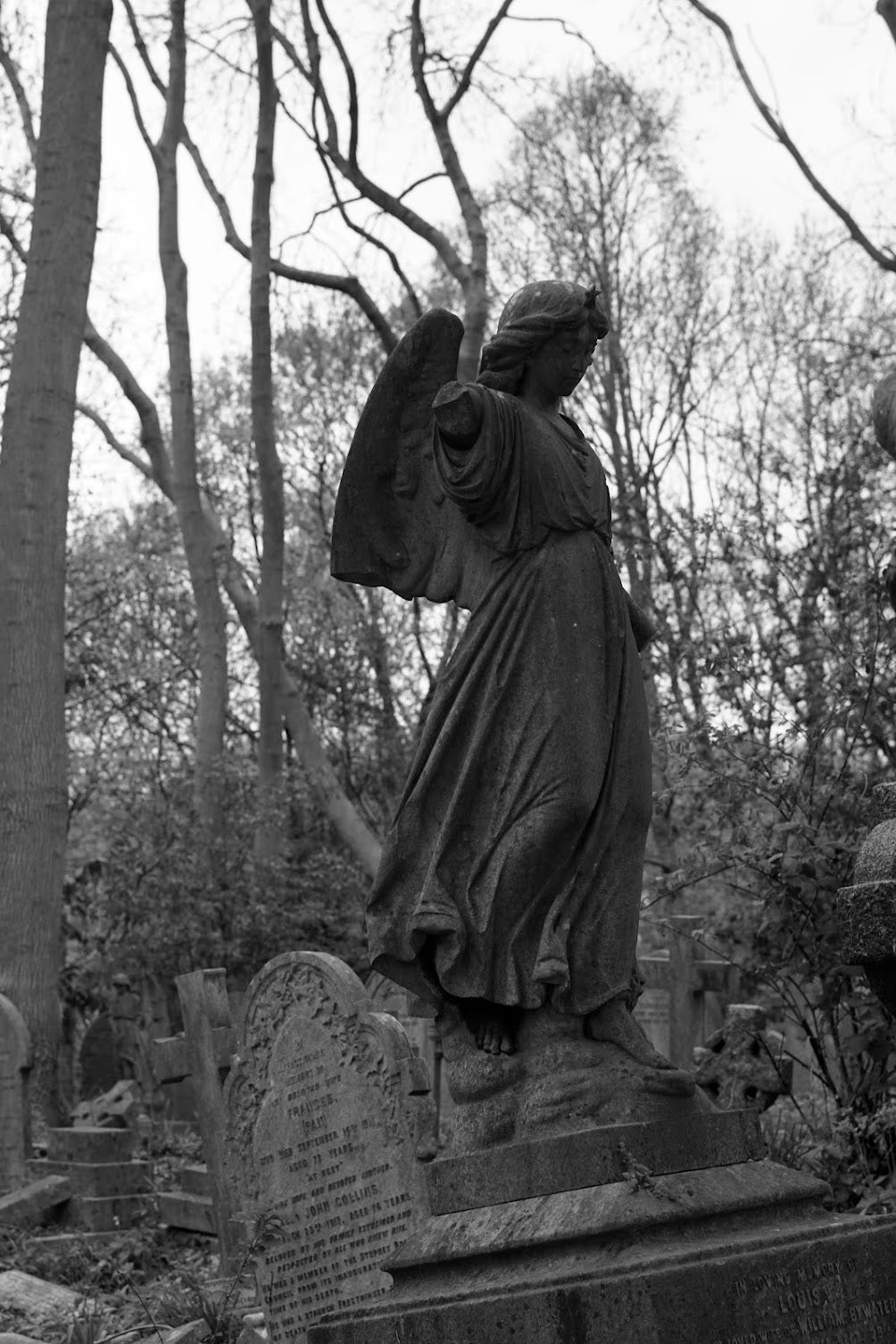
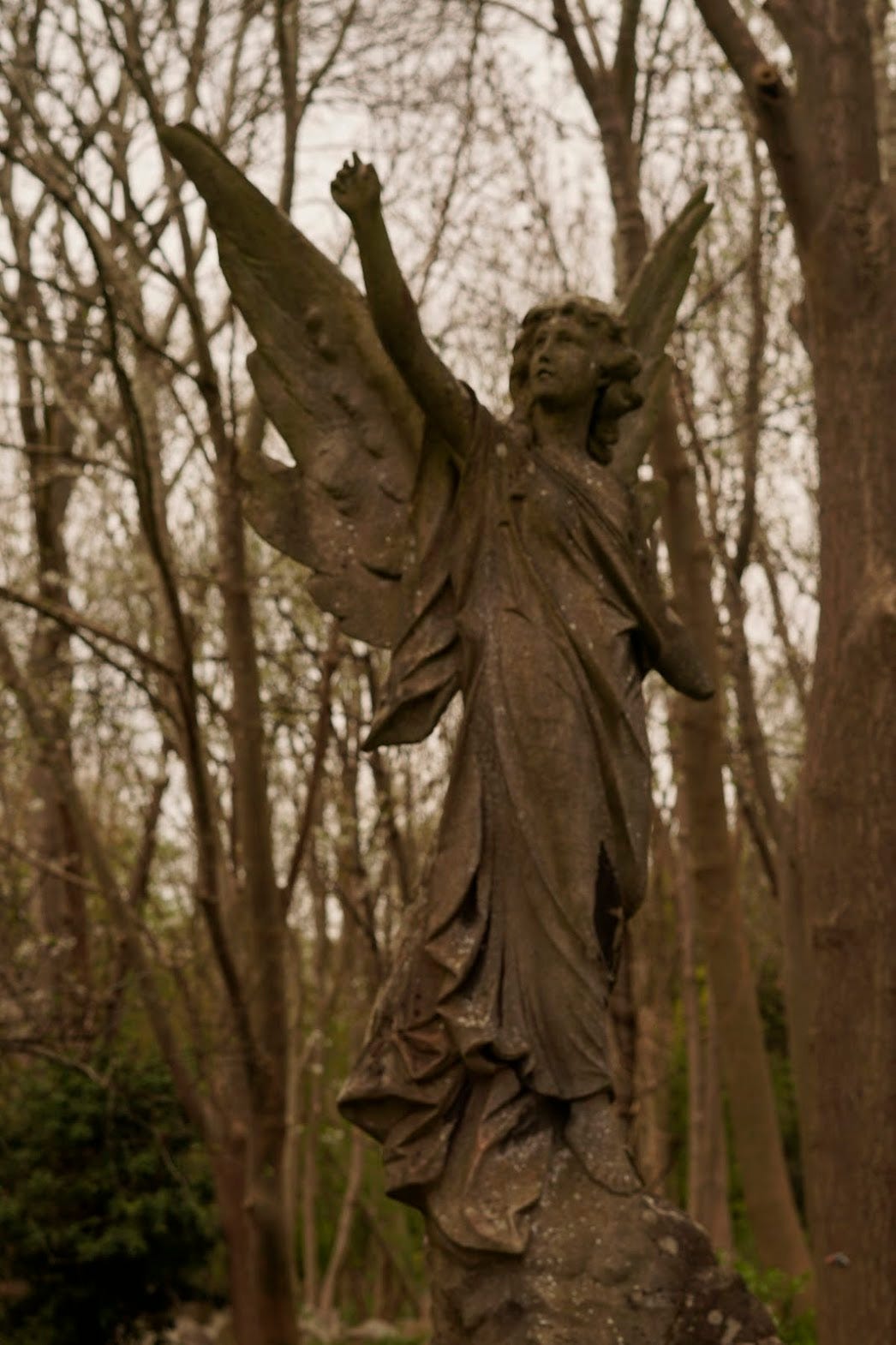
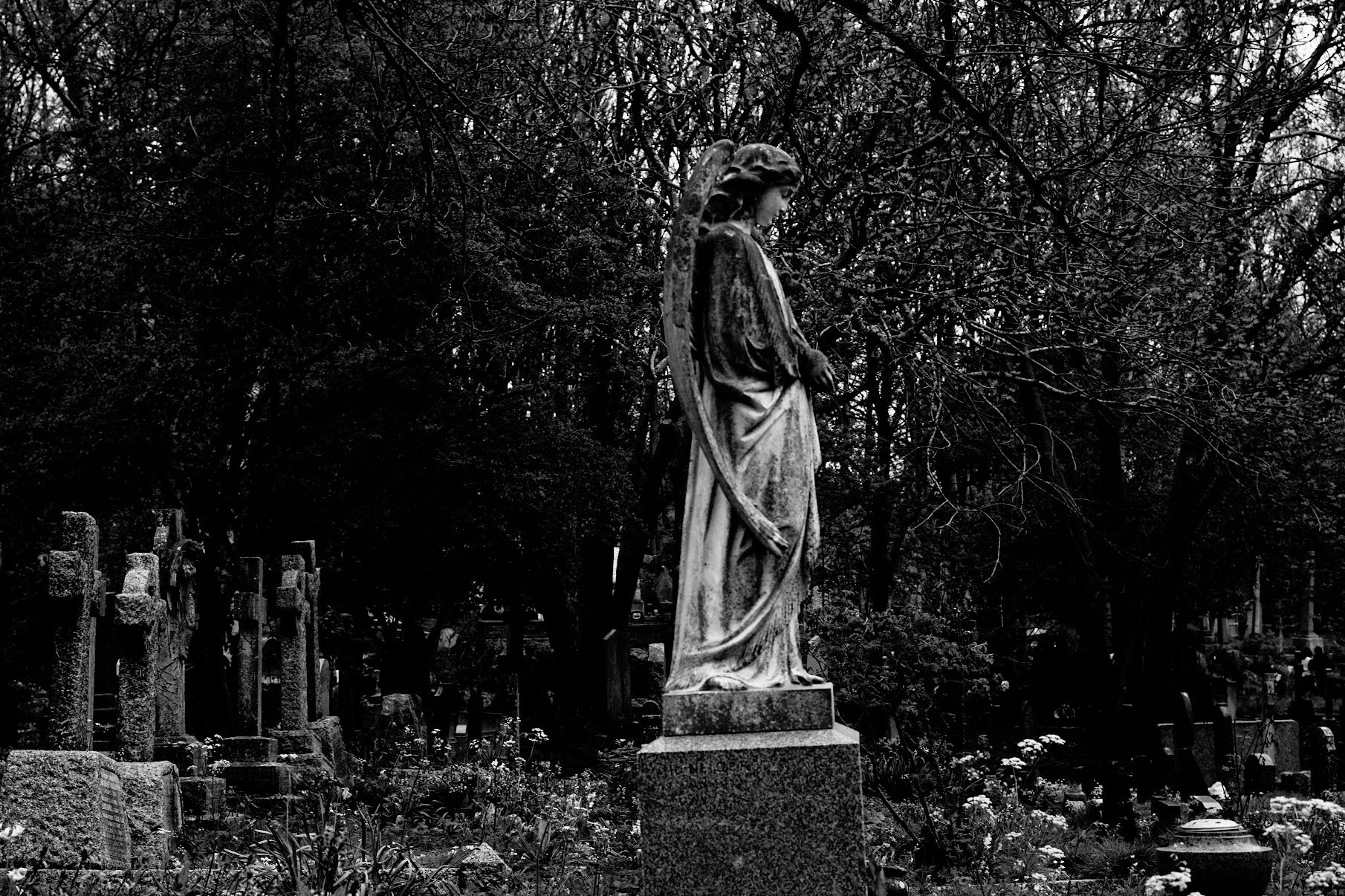
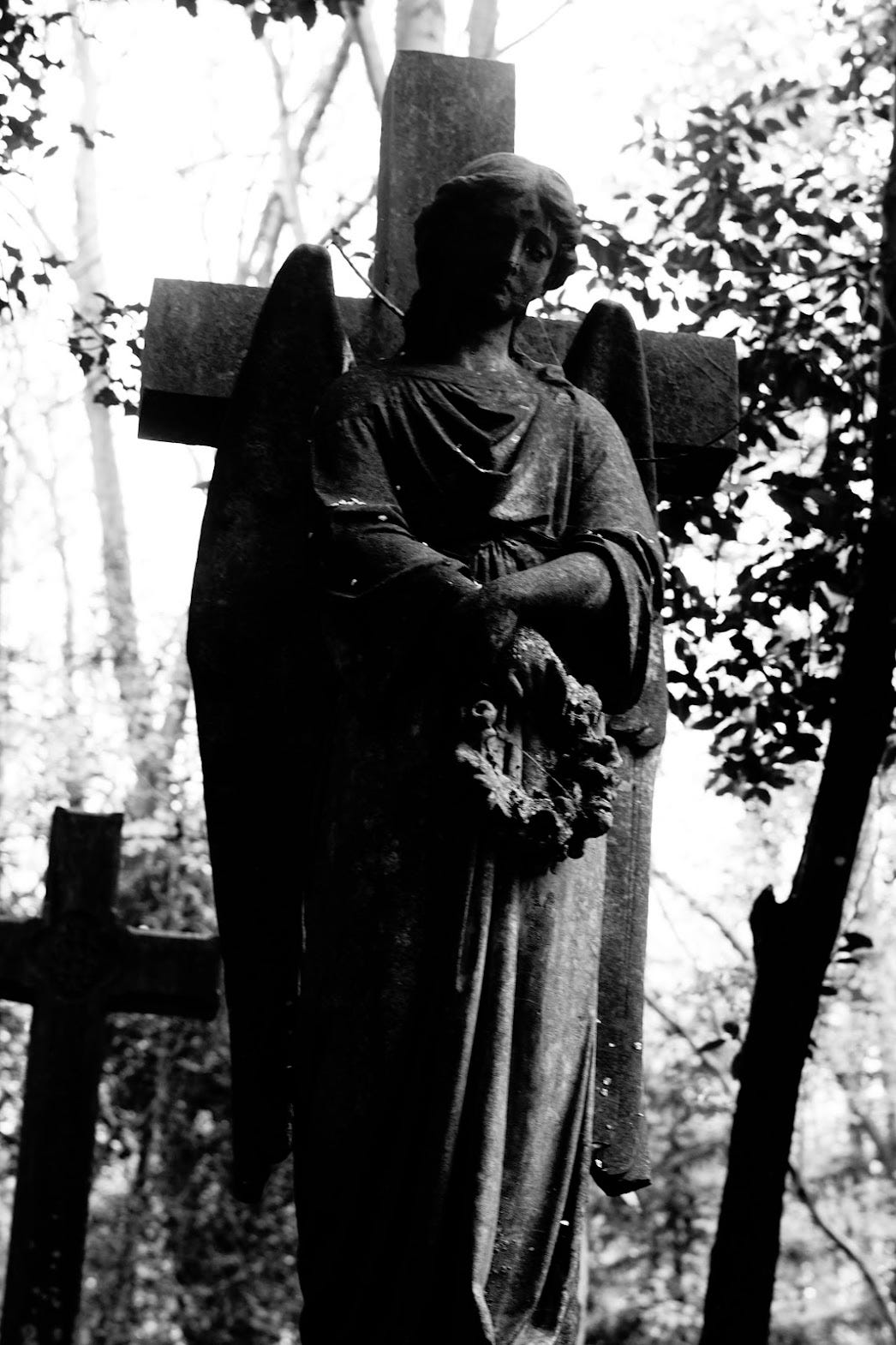
I’d squinted against the blanched sky, aligning myself with the outstretched arm of one of the stone angels ruefully pointing off somewhere into the trees. I’d found many such monuments and wondered whether there was any coherency as to how they’d been positioned. The angels pointed to the heavens presumably, beckoning to the souls who’d departed from beneath their feet, but I entertained the notion that were I to follow their direction I’d be led to some invisible aspect of the place, like a ley, or an entry to the midian below.
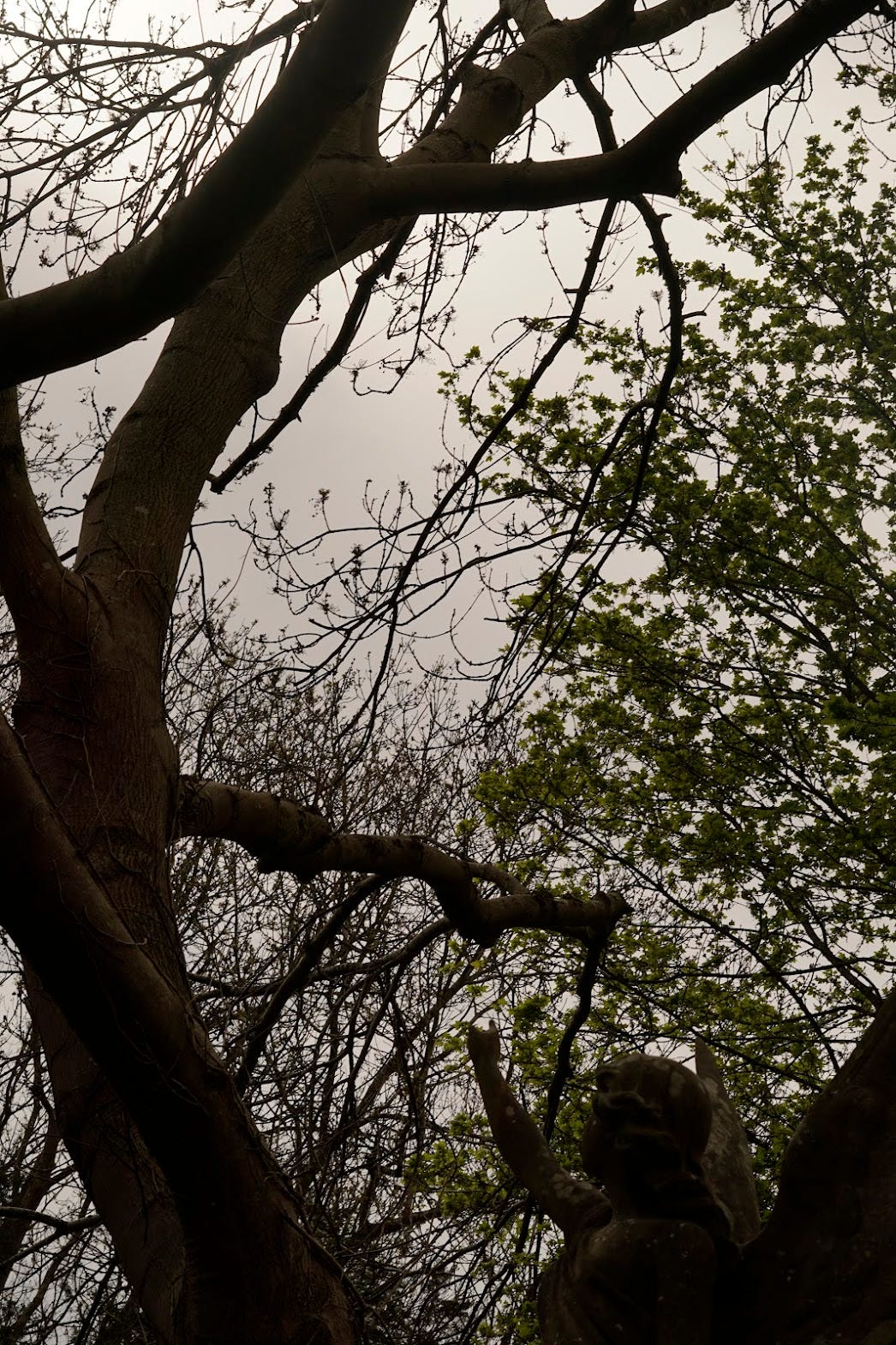
As I departed down the staircase of the West Side of the cemetery (which I’d explored cautiously as a funeral had recently occurred), I turned around to cast one last glance to see if I could catch glimpse of a cloaked figure, when I was startled by a suspicious orange shape spectating my departure. The creature stared at me with unsettlingly direct and crazed amber eyes, perhaps deliberating as to whether or not I carried food. He moved his head, as though assessing whether to approach, after which a passing employee shoed him away, likely discouraging familiarity with human visitors. The fox scampered away, soured at being interrupted during his assessment for food.
The presence I had felt watched by evidently not that of the vampyre…at least not obviously so.
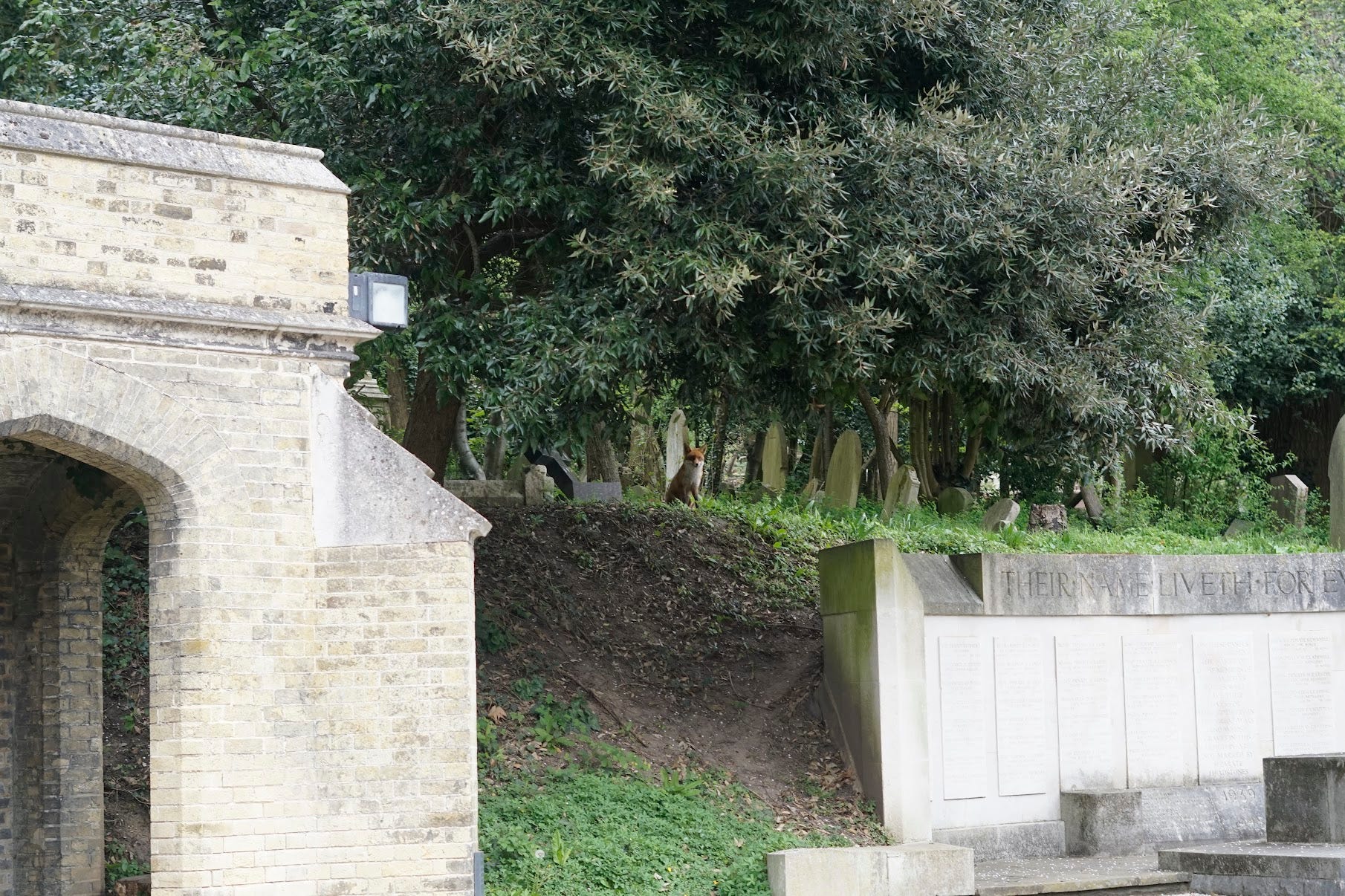
Psychogeography, Ostension and Legend Tripping
The account is much more elaborate than the summary above and involves many other instances of breaking into crypts to preform occult rituals. In my own venture, I did not encounter Nosferatu (for shame!) but I was enchanted nonetheless as I wandered the place, engaged in my own form of what folklorists and anthropologists call ostension, in which a folk narrative is acted out, so to speak. The Highgate occultist feud perfectly demonstrates this phenomena through embodiment, however embellished. In their escalating theatrics and constant thwarting of each other, Farrant and Manchester became characters within a highly publicized Gothic narrative (lending to the impression to some that the vampire was some sort of thoughtform) which seems constructed from the cultural zeitgeist at the time on the tails of the occult revival of the 60s and 70s and a Dracula Hammer film. In a strange way, they reverse engineered the Dracula tale, though whether they called forth the creature itself is another matter, but an instance nonetheless in which the relationship between place and psyche is especially bidirectional. Despite the salacious and sensationalized nature of the story, in a way through their own assigned roles as vampire hunters, they had been cast under the thrall of the vampyre…
One could, in this instance, consider Dracula as what Chaos Magician and comic author Grant Morrison termed a hypersigil, which is described as a narrative or symbolic system that shapes reality by influencing the collective imagination.
In this way, a story becomes a spell, reverse engineering itself into reality through interaction, enchantment of those watching. We see similar dynamics within the worlds of folklore and archetype, and how they act as microcosm that affects macrocosm through reflective symbolism.
With this being said, one might ascertain it is only a matter of time before I am sought out by the vampyre…
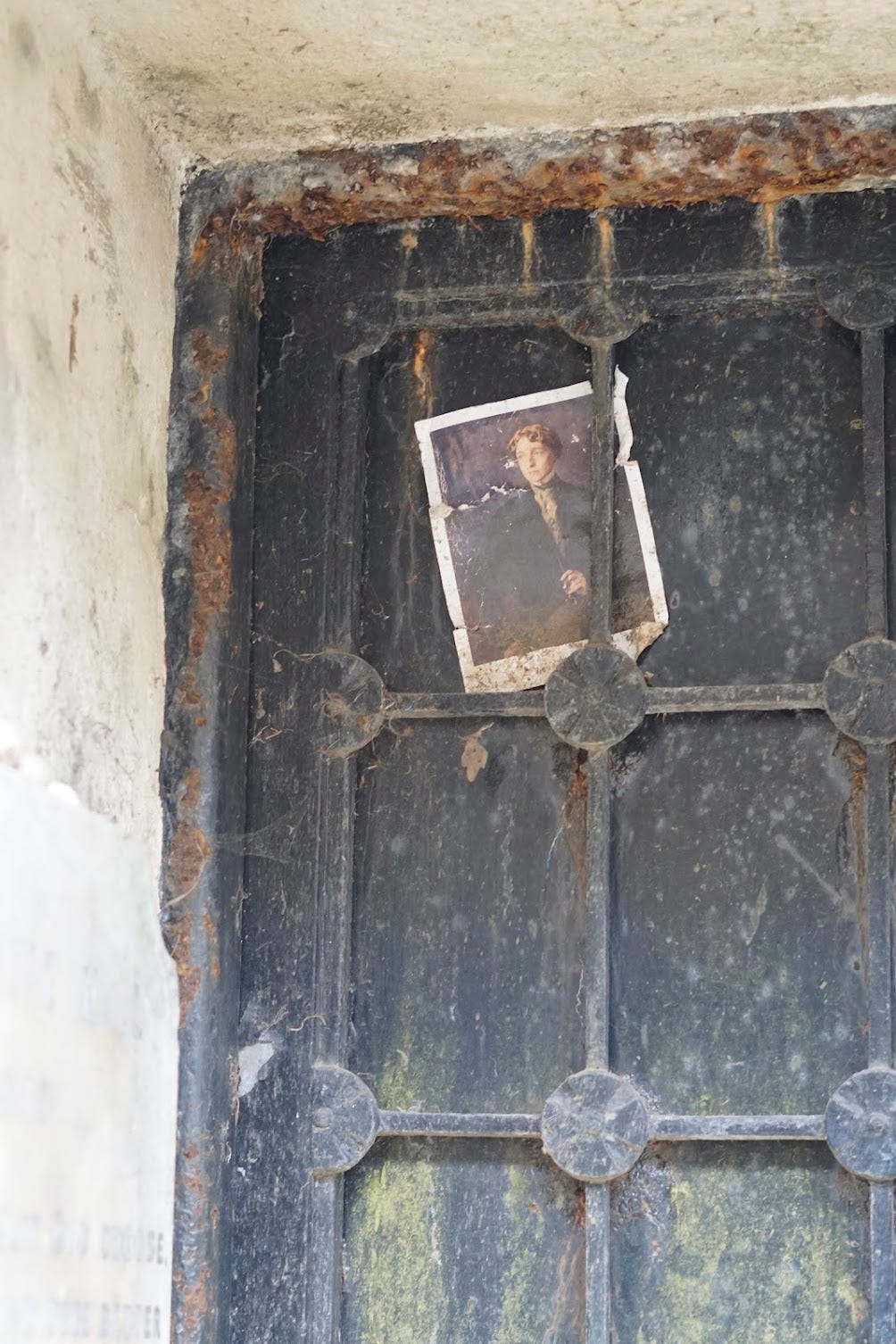
A portrait wedged within a gated crypt
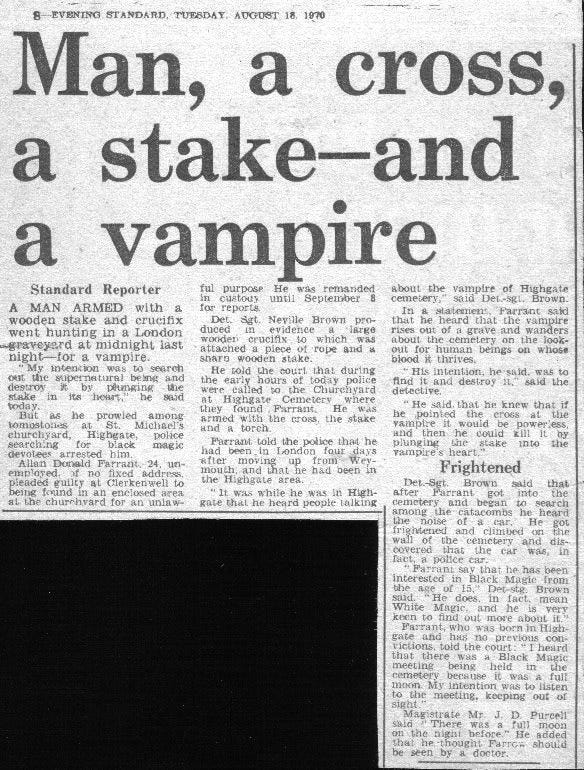
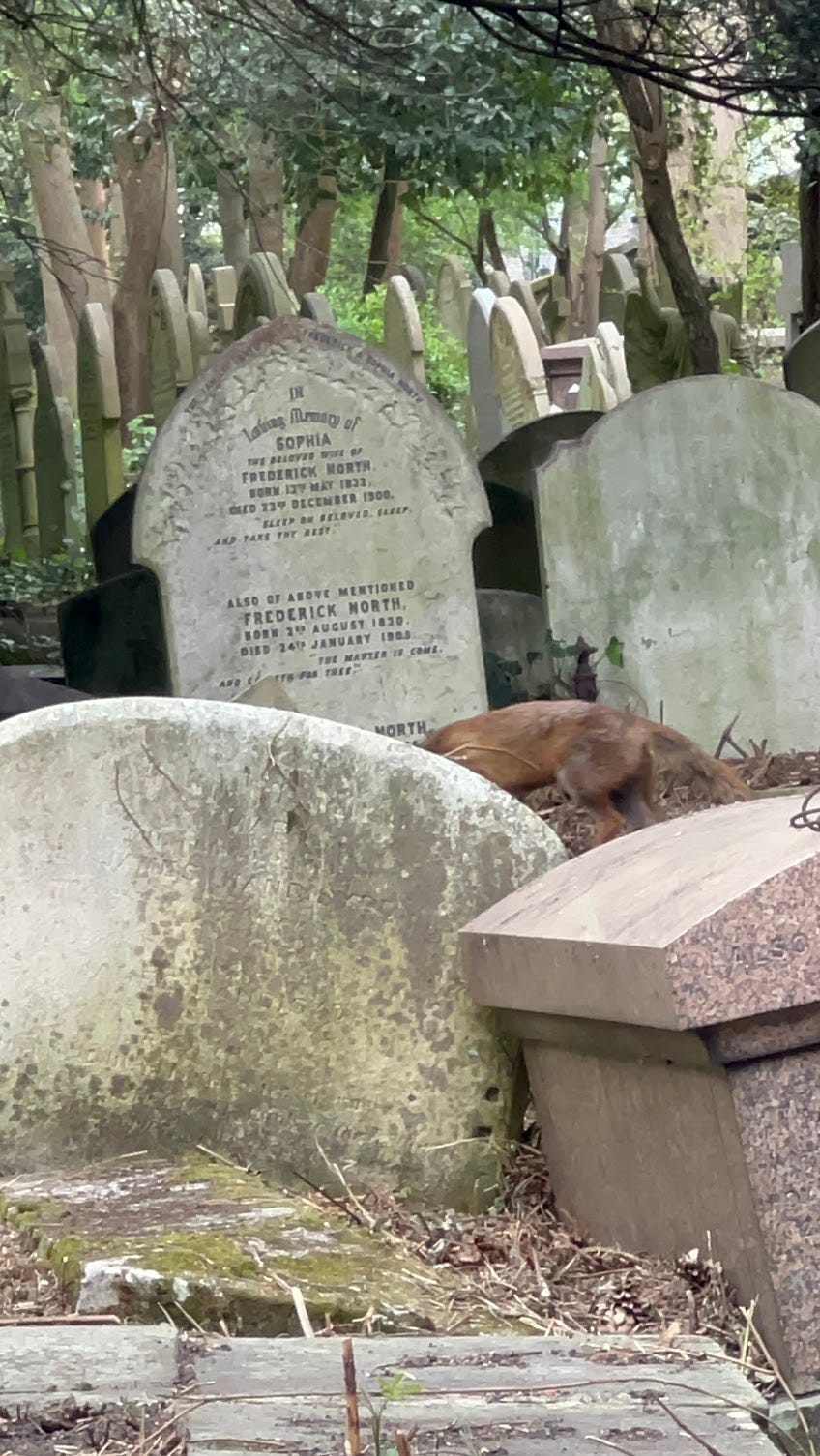
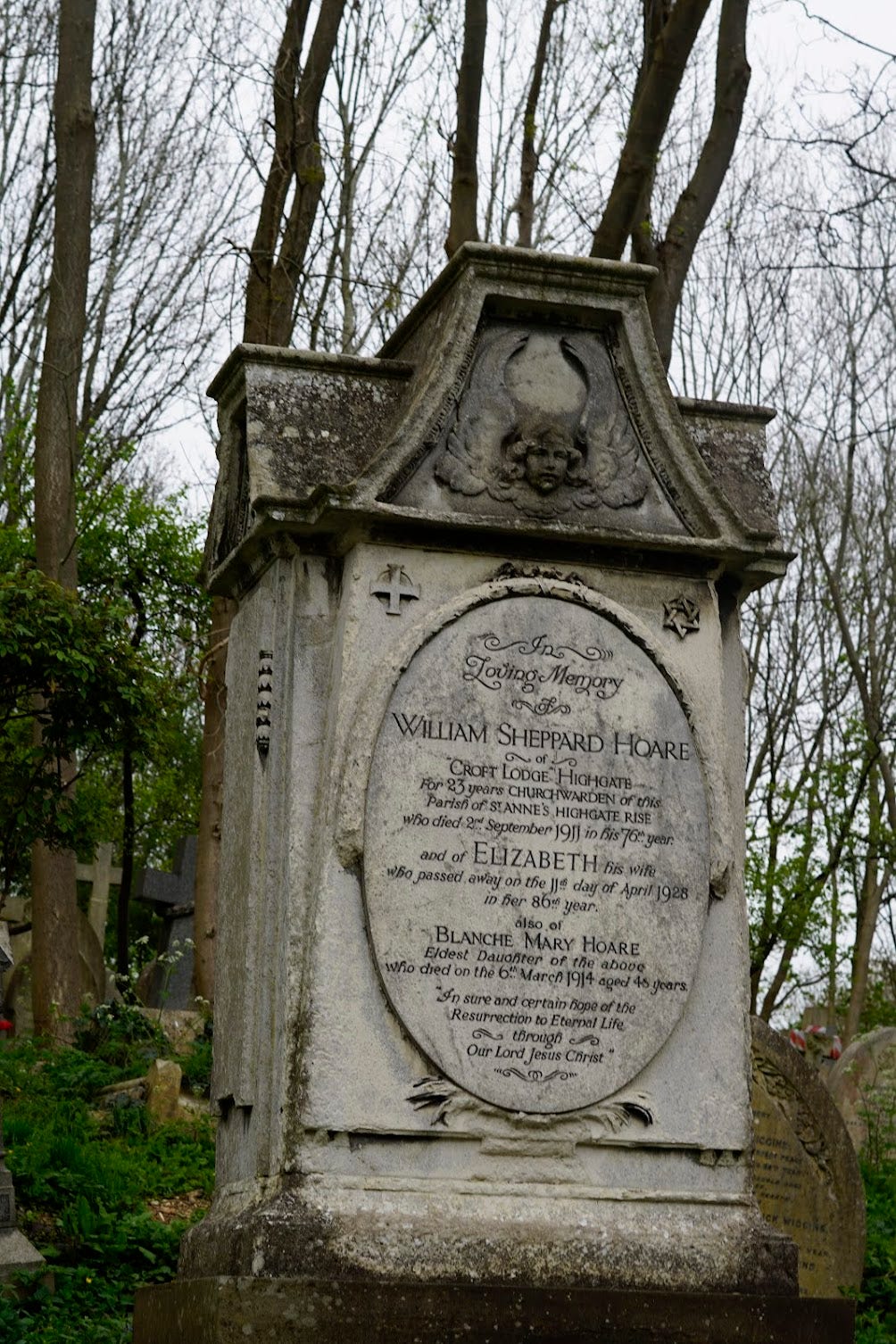
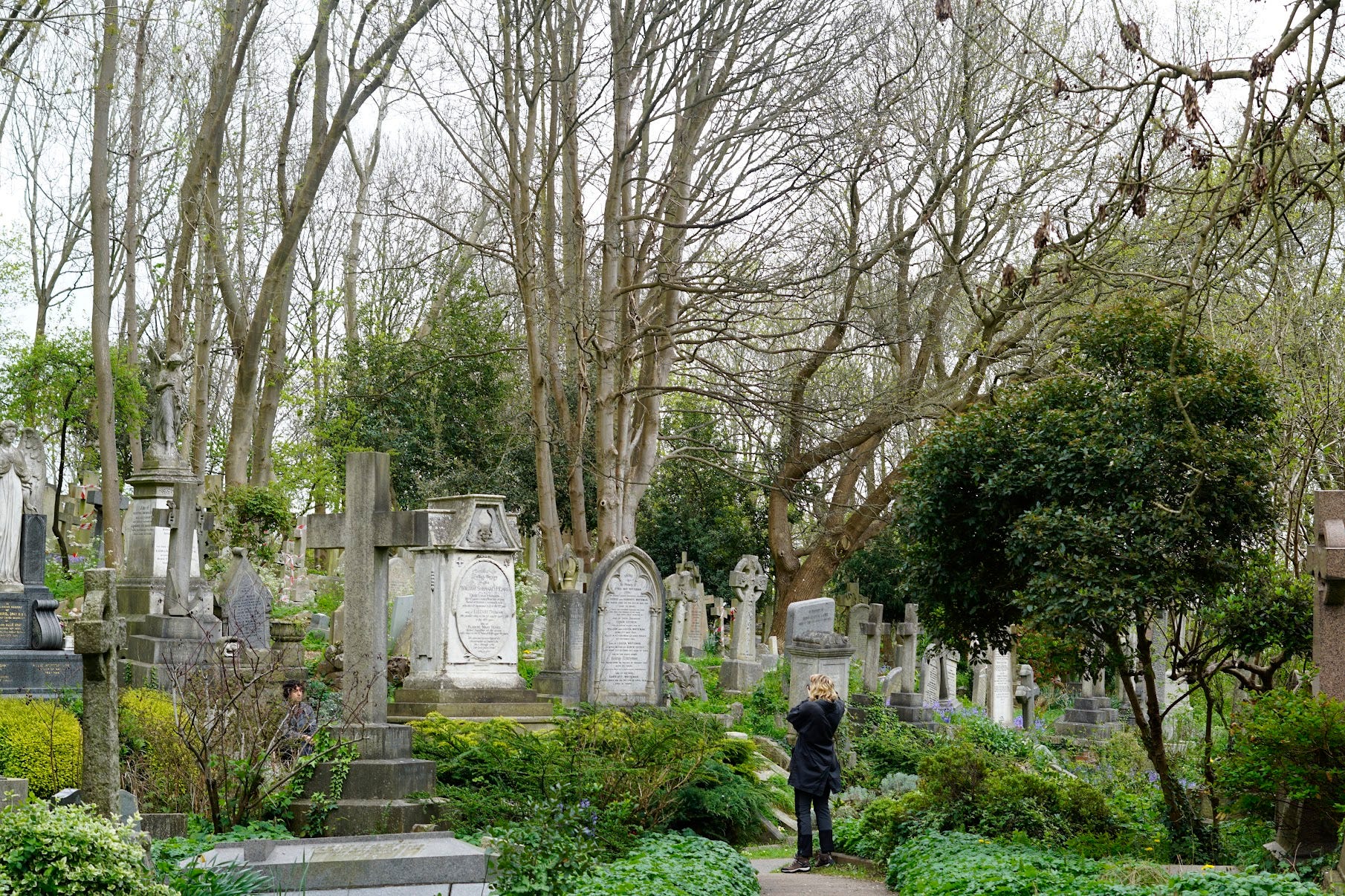
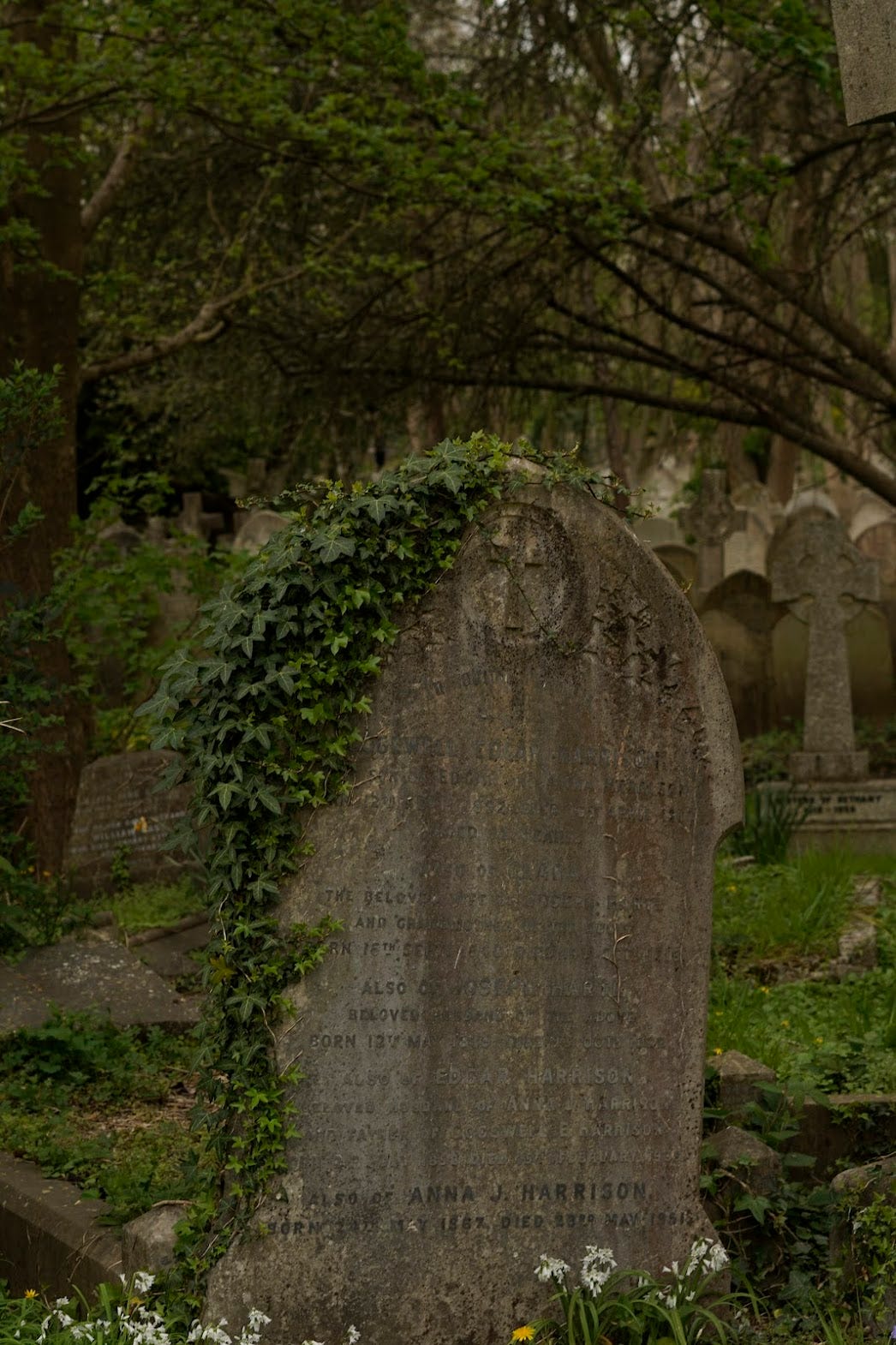
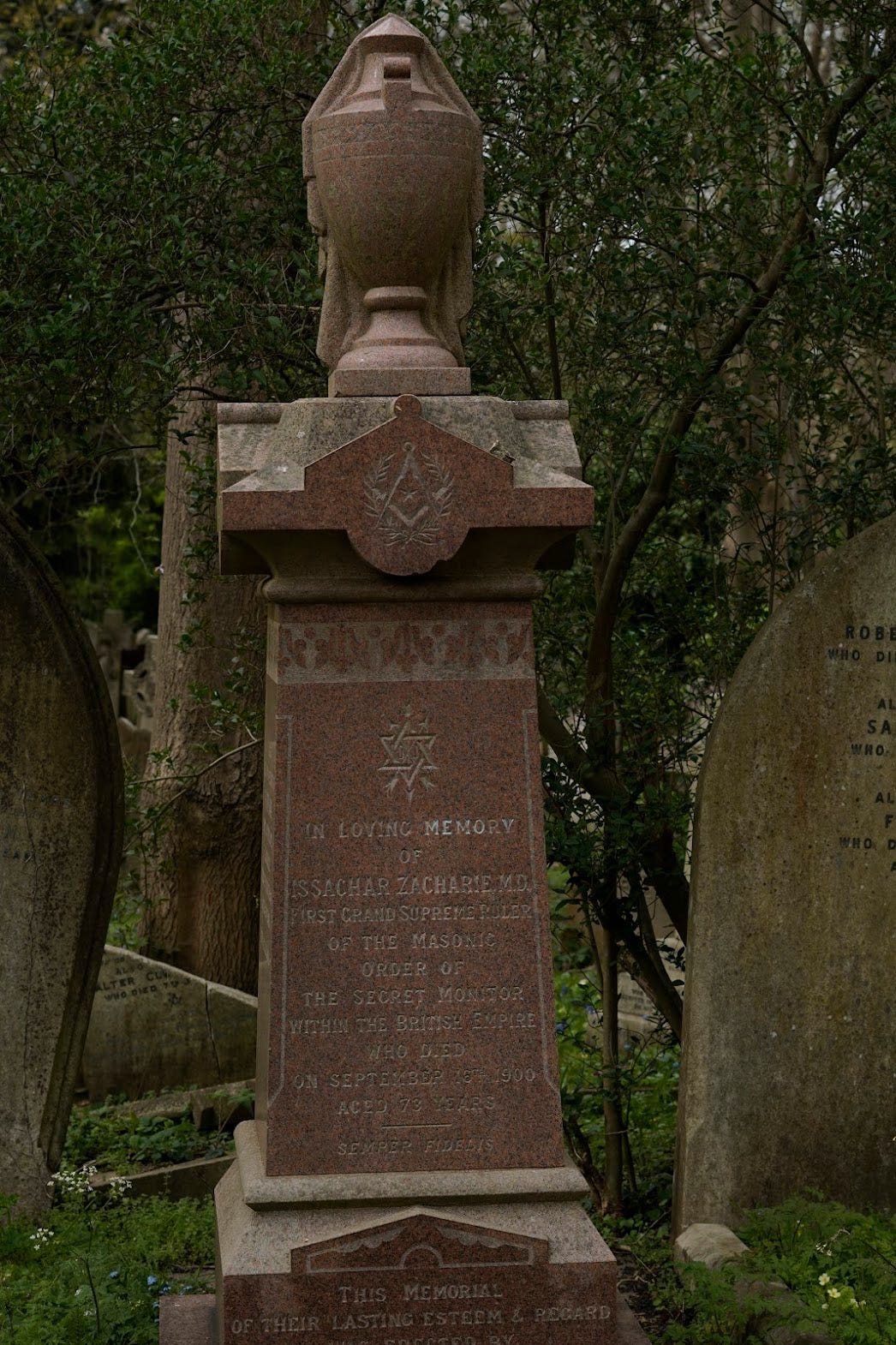
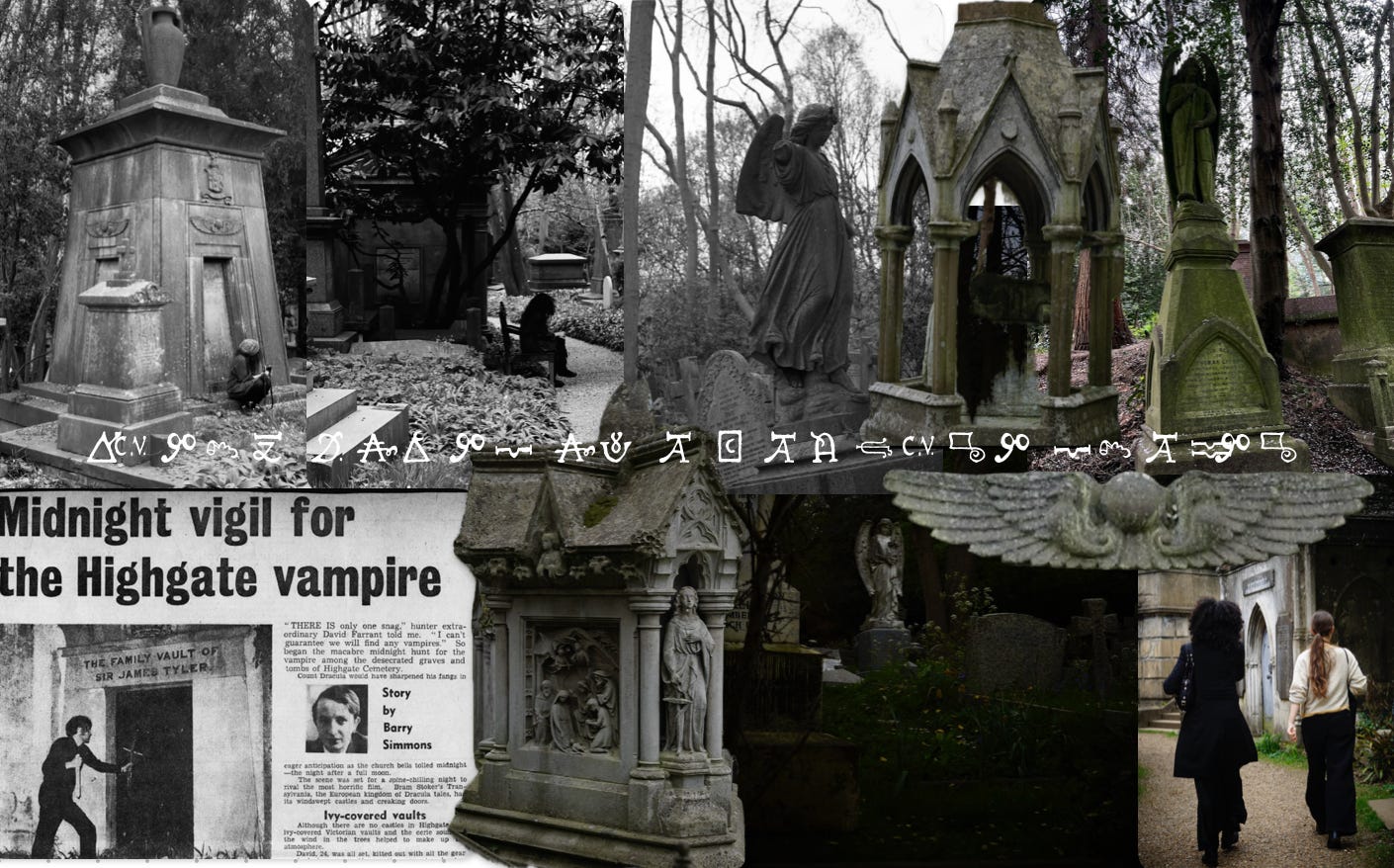
https://centerforinquiry.org/blog/legend_tripping_at_graves/
https://www.davidcastleton.net/highgate-vampire-highgate-cemetery-london/
Further Reading
https://andrewgough.co.uk/interviews_manchester/
https://davidfarrant.org/the-highgate-vampire/
First of all, LOVE the background music. All the little bits and pieces scattered throughout were perfect. This was truly an experience, and a masterfully crafted one.